
Tiny Bodyguards in the Mango Trees
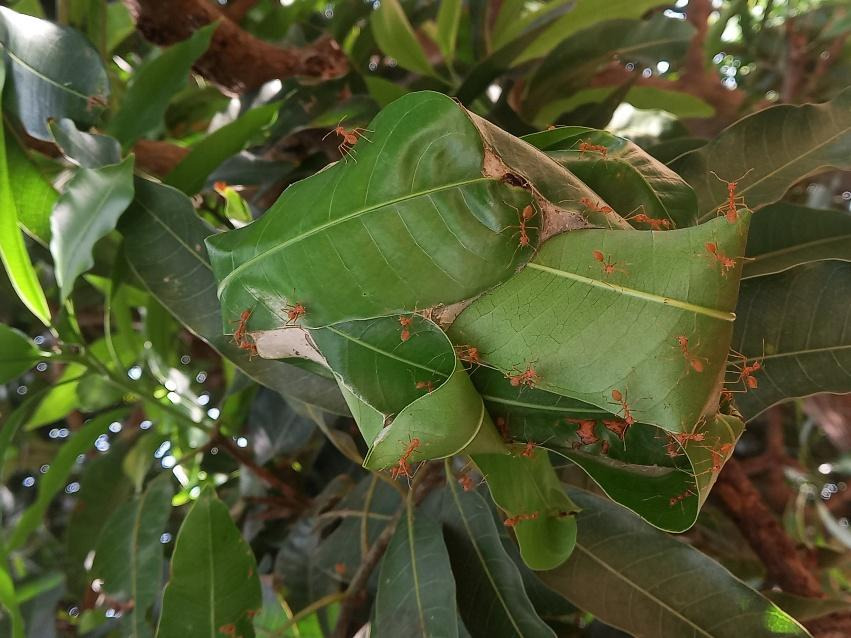
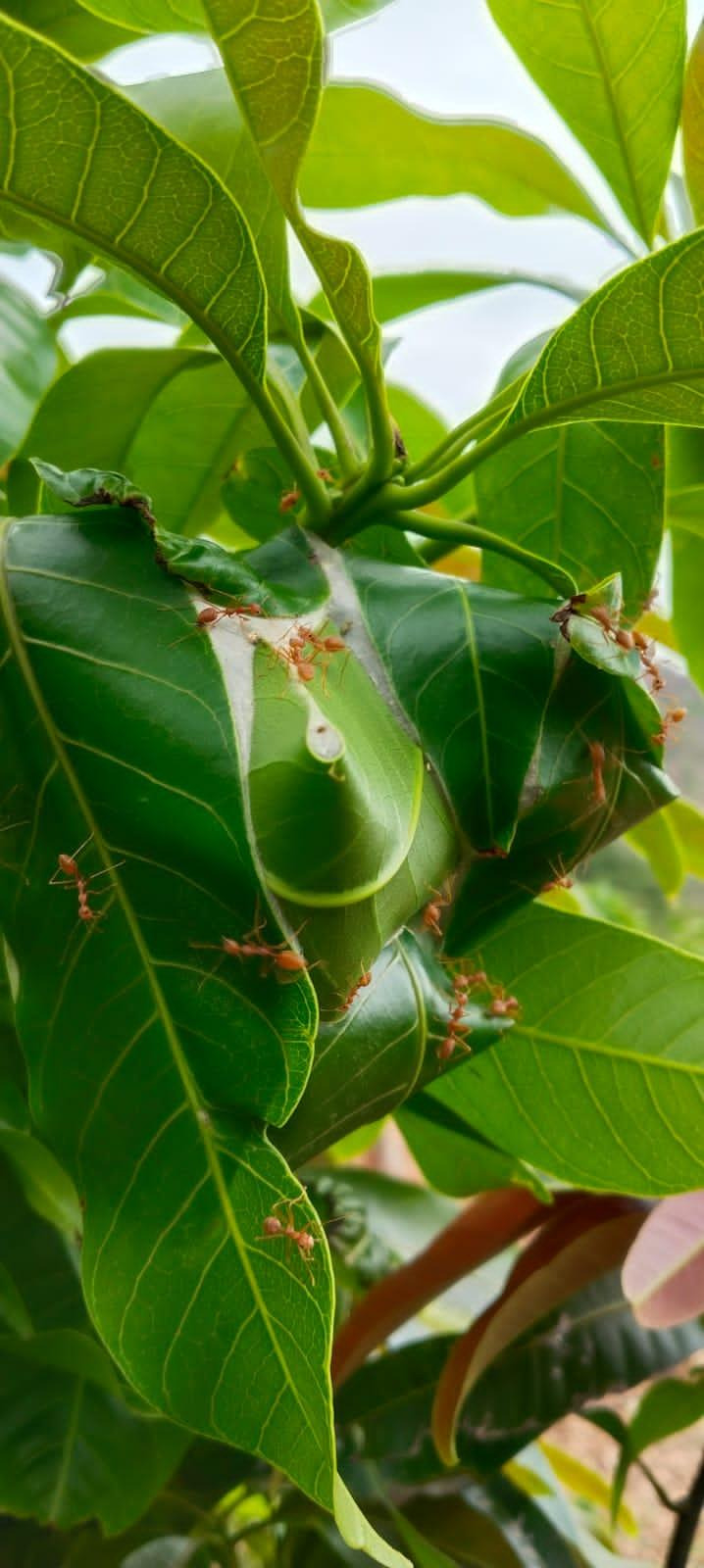
Imagine walking through a mango orchard and spotting leaves tangled together into strange green bundles. Look closer and you might find hundreds of tiny reddish ants marching aggressively along branches, guarding their leafy kingdom. These are weaver ants, Oecophylla smaragdina; nature’s tiny orchard bodyguards.
For centuries, farmers in parts of Asia have noticed something curious: mango trees occupied by weaver ants often seem healthier and less troubled by pests. But can these insects really protect mango trees naturally?
The answer is both fascinating and slightly complicated: yes, they can, but they work best with a little help from nature-friendly management.
Hunters, Not Just Builders
Weaver ants are famous for their unusual nest building behavior. They pull leaves together and stitch them using silk produced by their larvae, creating leafy nests high in the canopy. But building homes is only part of their story.
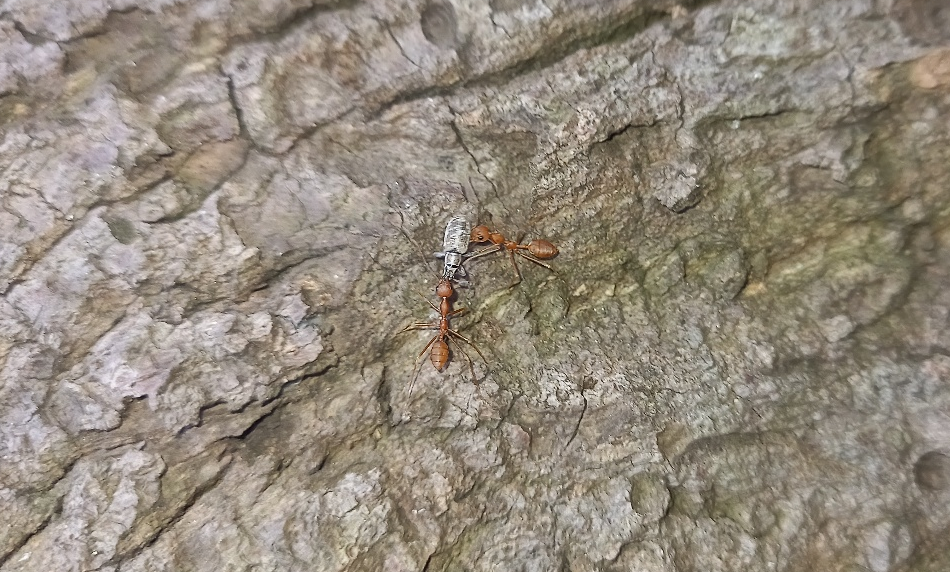
These ants are fierce predators. Once established on the mango tree, they patrol leaves, flowers, shoots, and fruits in search of intruders. Leaf feeders, fruit borers, thrips, and several other pests are often attacked or driven away by their aggressive behavior (Peng & Christian, 2005).
Because of this constant patrolling, weaver ants are called “living pesticides” – a natural pest control system that works around the clock.
Mango Trees: A Favorite Address
Mango trees provide an ideal home for weaver ants. Their dense canopy offers plenty of leaves for nest construction while the branching structure allows ants to move easily throughout the tree.
Rather than living in a single nest, a colony usually builds several leafy homes connected by busy ant highways. This creates a network that allows workers to patrol almost every part of the tree. For any insect hoping to enjoy a free meal, a mango tree occupied by weaver ants can be a risky place to visit.
Do They Really Reduce Pest Damage?
To answer this question, researchers compared mango trees with abundant weaver ants to trees with few or no ants. The results were striking. Trees protected by large weaver ant colonies suffered significantly less damage from the red-banded thrips, a tiny insect that feeds on mango leaves and can reduce tree health and flowering (Peng & Christian, 2004).
In the study, only 2.8% of shoots were damaged on trees with abundant weaver ants, compared with 21.1% on trees with fewer ants and 30.3% on trees without ants. Trees occupied by abundant ant colonies also produced more flower panicles, suggesting that healthier foliage may contribute to better flowering and fruit production.
The ants’ success comes from more than simply catching pests. Their constant movement and aggressive behavior create a hostile environment for invading insects. Many pests avoid settling on trees already occupied by these vigilant defenders.
More Than Just thrips
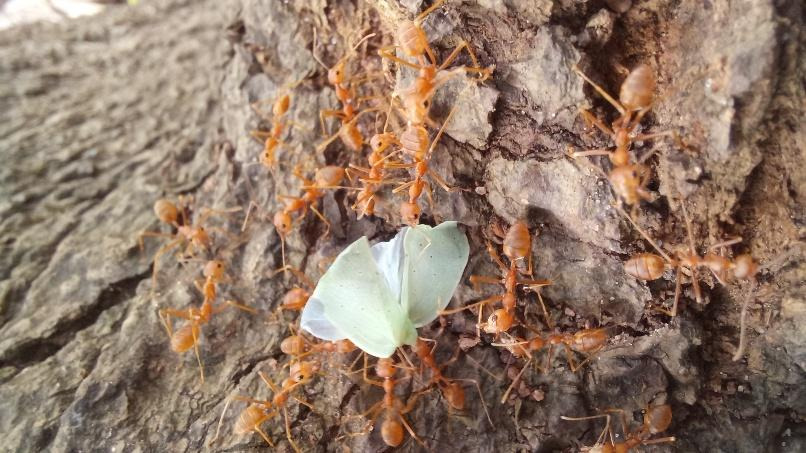
The benefits of weaver ants extend beyond a single pest species. Research has shown that they can help suppress a range of mango pests including leafhoppers, fruit-spotting bugs, mango tip borers, and seed weevils (Peng and Christian, 2005).
Unlike chemical pesticides, which are applied occasionally, weaver ants patrol their territory continuously. Every leaf, flower, and developing fruit becomes part of their hunting period. This round-the-clock protection makes them an attractive option for growers seeking environmentally friendly alternatives to conventional pesticides.
The Catch
If weaver ants are so effective, why are they not used in every orchard?
The answer is that no biological control agent is perfect. The effectiveness of weaver ants can vary depending on the orchard, the pest species present and how the orchard is managed. Some pests may be controlled very effectively, while others may require additional management strategies.
Researchers found that the best results were achieved when weaver ants were incorporated into an Integrated Pest Management (IPM) programme alongside other environmentally friendly practices (Peng & Christian, 2005). In this way, the ants provide continuous natural protection while growers can address any remaining pest problems using methods that are less harmful to the environment.
Rather than replacing every other management tool, weaver ants work best as part of a team one where nature does much of the heavy lifting.
Tiny Guardians with a Big Future
As agriculture searches for sustainable alternatives to synthetic pesticides, weaver ants are attracting renewed attention. They require no factory production, leave no chemical residues on fruit and work tirelessly throughout the growing season.
While they are not a perfect solution to every pest problem, they demonstrate how nature itself can provide powerful tools for crop protection. Sometimes, the best managers are already living in the trees.
Reference:


Leave a comment