
If you’ve ever paused to think about insect names, you’ll quickly notice a pattern: many of them are, quite simply, inaccurate. Some arise from folklore, others from mistaken identity, and a few seem to ignore basic biology altogether. By combining entomology (the study of insects) with etymology (the study of word origins), we can uncover the strange and often misleading stories behind these names.
Few examples illustrate this better than the so-called Jerusalem cricket.
The Case of the “Jerusalem Cricket”
At first glance, the name suggests something quite specific: a cricket from Jerusalem. In reality, neither part of that description is correct.
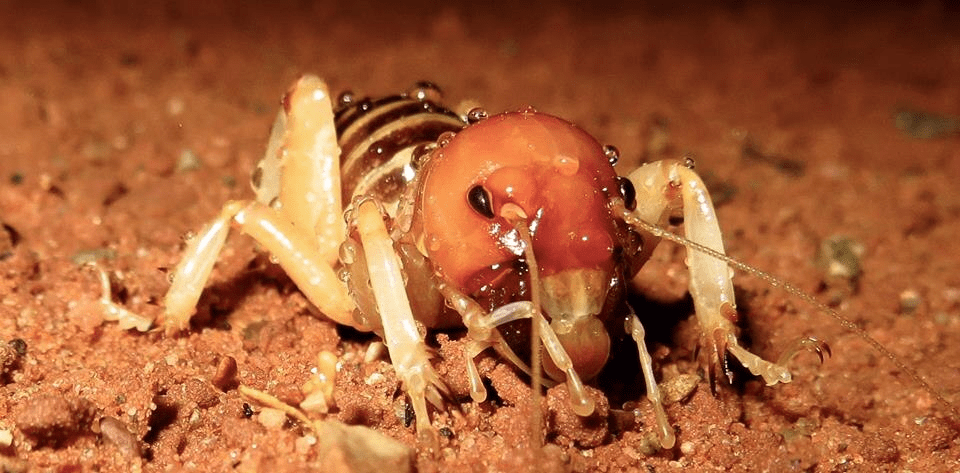
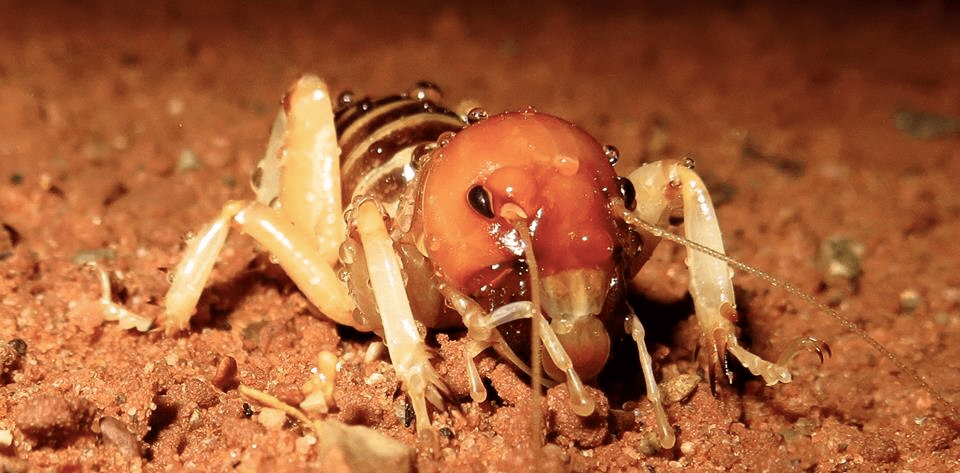
The insect commonly known as the Jerusalem cricket and scientifically classified under the genus Stenopelmatus, is not a true cricket. While it belongs to the order Orthoptera, which includes crickets and grasshoppers, it falls into a different family altogether. It lacks the defining characteristics of true crickets, such as their chirping ability. Instead, Jerusalem crickets are silent, burrowing insects more closely related to wētā and other ground-dwelling orthopterans.
Just as misleading is the geographical reference. These insects are native to western parts of North America. They do not come from the Middle East, and certainly not Jerusalem.
So Where Did the Name Come From?
The exact origin of “Jerusalem cricket” is uncertain, but several theories offer clues. One suggestion is that the name emerged from old exclamations such as “Jerusalem!” used to express surprise or alarm. Given the insect’s unusual appearance (large head, powerful mandibles, and almost human-like facial structure) it’s easy to imagine early encounters provoking that kind of reaction.
Another possibility is simple linguistic drift: a dramatic or exotic-sounding phrase became attached to a creature that already seemed strange and unfamiliar. Over time, the name stuck, even if it never accurately described the insect.
Appearance vs. Reality
Jerusalem crickets are often misunderstood because of how they look. Their oversized heads and thick bodies can make them seem intimidating, and in some cultures they’ve picked up ominous nicknames.
In reality, they are harmless to humans. They spend most of their lives underground, feeding on roots and decaying organic matter. Rather than being threatening, they play a quiet but important role in soil ecosystems.
Why the Misleading Name Stuck
The persistence of the name “Jerusalem cricket” highlights an important distinction between scientific and common naming. Scientific names are standardised and reflect evolutionary relationships. Common names, on the other hand, are shaped by culture, language, and human perception.
Once a name becomes widely used, it’s remarkably difficult to change, even when it’s clearly inaccurate. In this case, the name tells us far more about human imagination than about the insect itself.
When Language Meets Science
Looking at the Jerusalem cricket through both entomology and etymology reveals something deeper than just a naming error. It shows how people historically tried to make sense of unfamiliar creatures, often blending observation with exaggeration or myth.
These names act as small cultural artefacts. They preserve the reactions, beliefs, and even humour of the people who first coined them. While science has since clarified what these insects really are, the original names remain as reminders of that earlier perspective.
Conclusion
The Jerusalem cricket is neither from Jerusalem nor a true cricket, yet its name has endured. Alongside future examples like the ladybird and firefly, it highlights just how often everyday insect names stray from scientific reality.
Rather than being simple mistakes, these names are stories, snapshots of how humans once interpreted the natural world. And in that sense, every misleading name offers not just a lesson in biology, but a glimpse into our own history of curiosity, confusion, and imagination.
References:
Weissman D. B. (2005) JERUSALEM! CRICKET? (Orthoptera: Stenopelmatidae: Stenopelmatus ); Origins of a Common Name. American Entomologist. 51 (3) 138-139 https://doi.org/10.1093/ae/51.3.138


Leave a Reply