
What Actually Happens at a Scientific Conference?
Growing up, the year was split into two seasons. During the cooler months of the year my dad, who works in horticulture, was usually home. However, as soon as spring arrived, he was off travelling to conferences, nurseries and retailers across the country. One week he’d be discussing drought-tolerant ornamentals with garden centres; the next he’d be handling alligators in rural Florida. I loved hearing stories from his travels, but it was the conferences that always had an air of mystery surrounding them.
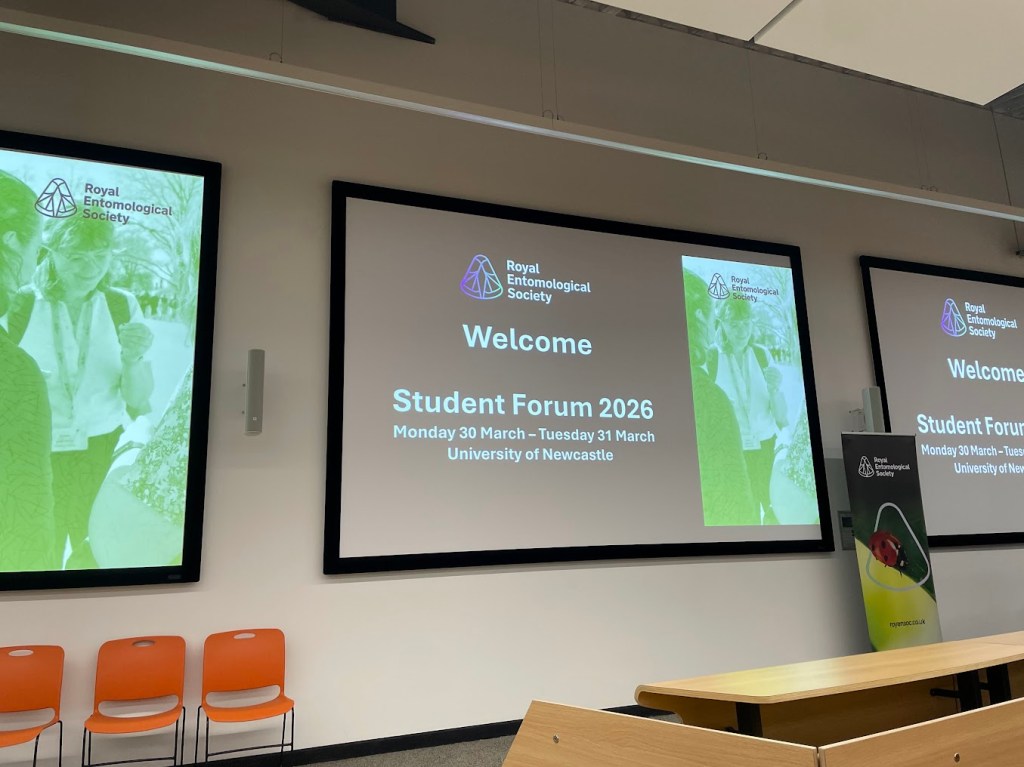
This past March, I finally attended one myself: the Royal Entomological Society’s 2026 Student Forum in Newcastle.
Despite being aimed at students, I arrived feeling like an outsider. I’d recently finished my MSc, wasn’t in academia, and was spending my days applying for PhDs and research assistant positions with little success. Instead, I was welcomed into a room full of people at every stage of their careers who all shared the same enthusiasm for insects. If there’s one thing I’ve learned about entomologists, it’s that they’re rarely afraid to embrace their interests wholeheartedly…and that’s exactly what drew me to the community in the first place.
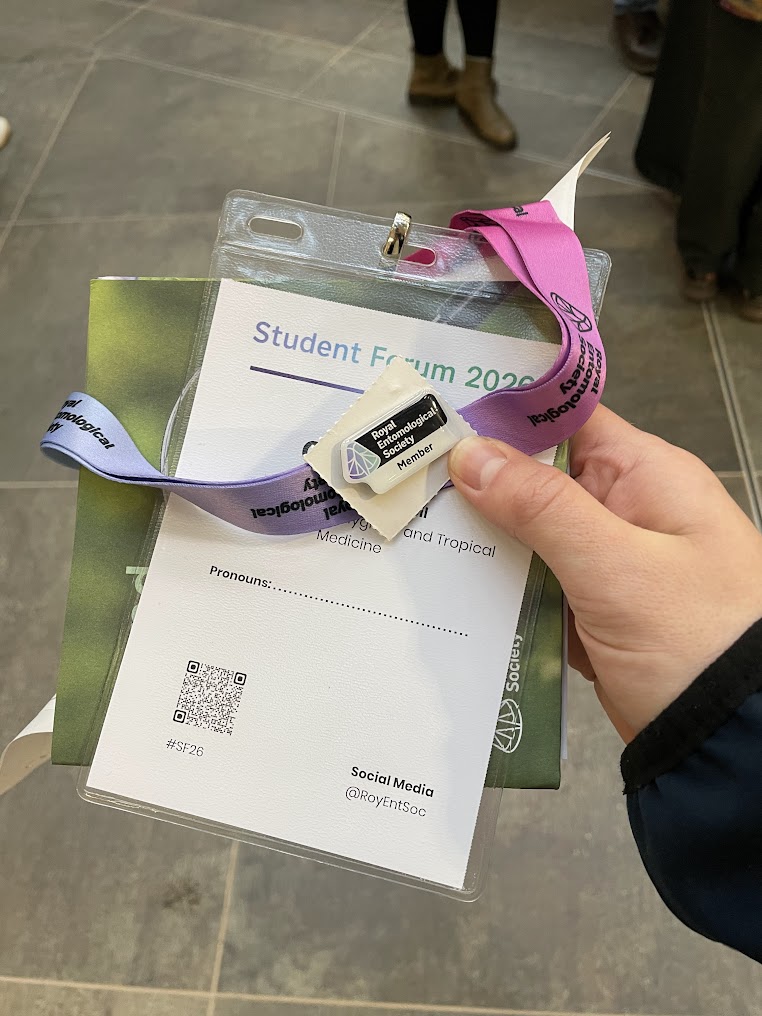
The first morning began with the familiar conference ritual: collecting a badge and lanyard before chatting with other attendees. Within minutes I’d met students from across the UK, including one who had travelled all the way from Cornwall, an archaeological entomologist and an enthusiastic beetle researcher. Before long we were heading into the lecture theatre for the opening keynote.
The programme covered an impressive range of topics, from agricultural pest management and medical parasitology to insect conservation. My favourite part wasn’t necessarily the talks themselves, but the questions afterwards. It’s fascinating to hear researchers explain the details behind their work and see how different ideas connect across disciplines. I furiously typed notes on my laptop throughout, with every presentation sparking another idea in my head.
After lunch we moved into workshops. The first, led by former entomologist turned counsellor Kath Allen, focused on wellbeing in research. It couldn’t have come at a better time. Research can be intensely competitive, and it’s easy to tie your self-worth to applications, funding or publications. The workshop was a valuable reminder that growth isn’t measured solely by success, and that extending yourself the same kindness you offer others is just as important.
Later came the poster session, where students presented their research in a visual format. Distilling months of work onto a single poster is no easy task, and as someone who’s designed posters before, I appreciated just how difficult it is to balance clarity with detail. The variety of projects on display highlighted the breadth of entomology, and the friendly discussions around each poster were just as rewarding as the formal presentations.
The evening ended with an insect-themed pub quiz…which is perhaps the most entomologist activity imaginable. It was a relaxed way to get to know everyone outside the lecture theatre and reminded me that conferences are just as much about building meaningful connections as they are about sharing research.
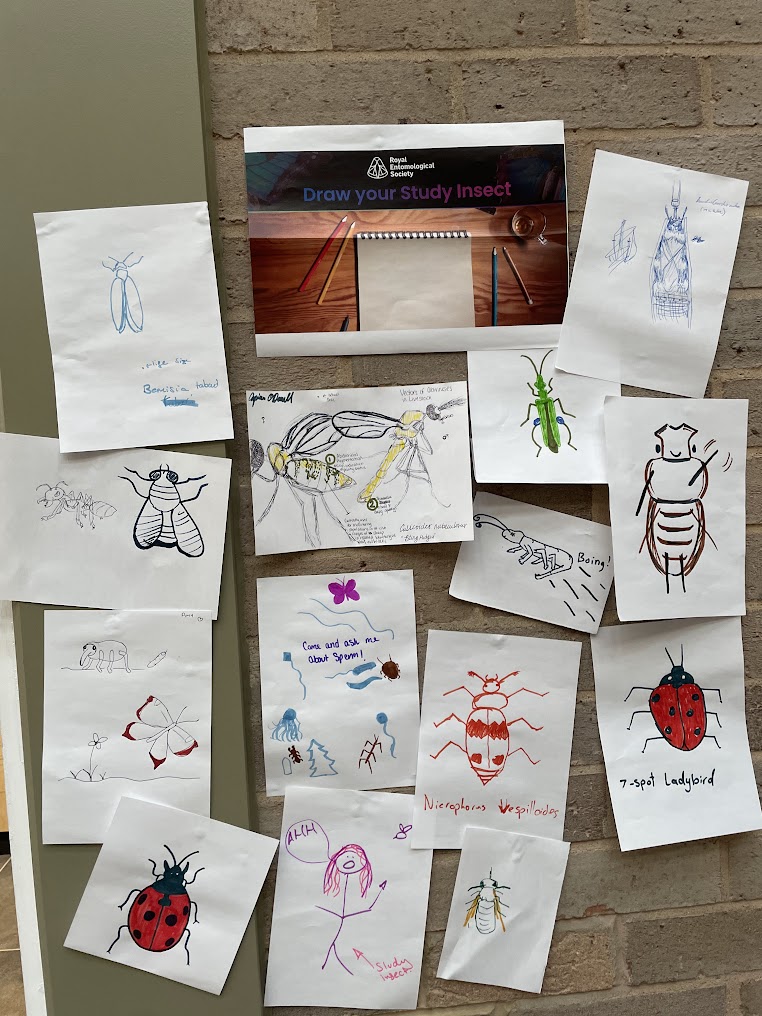
The second day followed a similar rhythm of talks and discussions, but the highlight was a science communication workshop led by Vivek Nityananda. We explored creative ways of translating complex scientific ideas into something accessible for wider audiences. As someone who enjoys science communication, it felt like switching between two languages: one for researchers and one for everyone else. It highlighted a key driver of communication for me: making research meaningful to those outside the field.
The conference concluded with a panel discussion where the keynote speakers answered questions about careers in entomology. Hearing experienced researchers speak honestly about their own journeys was reassuring. No career had followed a perfectly straight path, and uncertainty seemed to be a universal experience rather than an exception.
Leaving the conference, I realised I’d rediscovered something I’d been missing.
Since finishing my MSc, I’d found myself questioning whether I should continue pursuing entomology at all. The combination of a difficult job market, unsuccessful PhD applications and the uncertainty that comes with early career research had slowly chipped away at my confidence. Spending two days surrounded by people who shared the same curiosity reminded me why I started in the first place.
I think that is what surprised me the most about scientific conferences. From the outside they can seem intimidating or exclusive, but in reality they’re places where passionate people come together to share ideas, learn from one another and occasionally compete in insect-themed pub quizzes. They’re far less about prestige than they are about community.
If you’re a student, an aspiring researcher, a hobbyist or simply someone who’s curious about the natural world, don’t let the thought of attending alone put you off. Going by myself pushed me outside my comfort zone, introduced me to people I’d never otherwise have met and reminded me why I love this field.
You never know where one conference might lead. Sometimes the biggest takeaway isn’t a new piece of research and is instead remembering why you fell in love with the subject in the first place.


Leave a Reply