
If you’ve ever paused to think about insect names, you’ll quickly notice a pattern: many of them are, quite simply, inaccurate. Some arise from folklore, others from mistaken identity, and a few seem to ignore basic biology altogether. By combining entomology (the study of insects) with etymology (the study of word origins), we can uncover the strange and often misleading stories behind these names.
Few examples demonstrate this better than the beloved ladybird, also known as the ladybug in North America.
The Case of the Ladybird
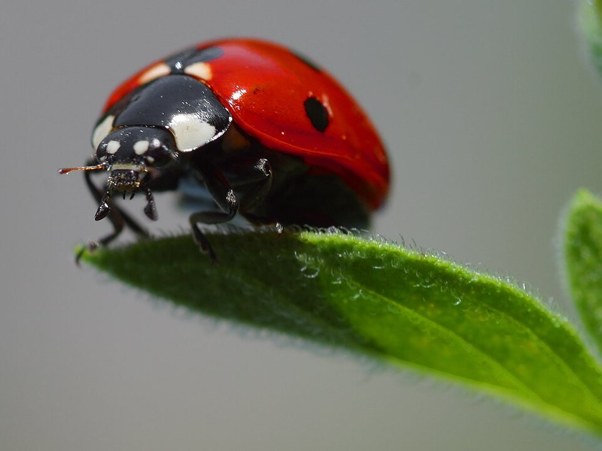
At first glance, the name seems straightforward enough: a small bird associated with a lady. In reality, neither description is scientifically accurate.
Ladybirds belong to the family Coccinellidae, a group of beetles within the order Coleoptera. They are not birds, and despite the American name “ladybug,” they are not true bugs either. True bugs belong to the order Hemiptera, characterised by specialised piercing-sucking mouthparts. Aphids are a common prey of ladybirds and are an example of true bugs. Ladybirds, by contrast, possess the hardened wing cases (elytra) and chewing mouthparts that define beetles.
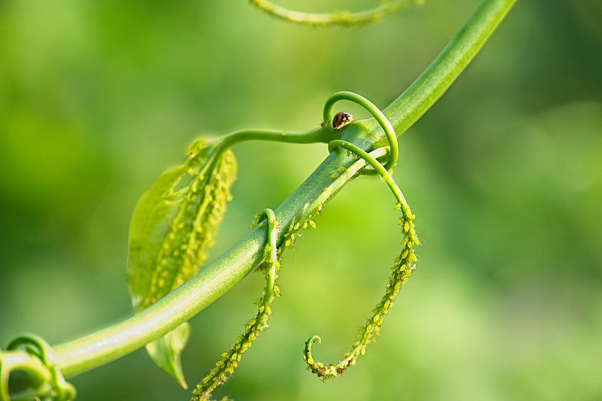
In other words, whether you call it a ladybird or a ladybug, the insect itself is neither a bird nor a true bug.
So Where Did the Name Come From?
The story behind the name is rooted in medieval Christian tradition. Ladybirds became associated with the Virgin Mary, traditionally known as “Our Lady”, and were sometimes referred to as “Our Lady’s birds”. According to traditional accounts, ladybirds were seen as beneficial insects because they fed on aphids and other crop pests, making them welcome visitors to farmland and gardens. Their association with Mary may have been strengthened by their bright red colour, which was linked in folklore to her cloak.
The seven-spot ladybird (Coccinella septempunctata) became particularly associated with this symbolism, with its seven spots later interpreted as representing Mary’s seven joys and seven sorrows. These interpretations are part of religious folklore rather than established historical fact, but they help explain how a beetle came to be associated with “Our Lady”. Over time, “Our Lady’s bird” became shortened to “ladybird” in English, while “ladybug” became the more common form in North America.
Appearance vs. Reality
Ladybirds are among the most recognisable insects in the world. Their bright red, orange, or yellow bodies decorated with black spots have made them symbols of good luck in many cultures.
Their cheerful appearance, however, hides an impressive predator. Both adults and larvae feed voraciously on aphids, scale insects, mites, and other soft-bodied pests. A single ladybird can consume dozens of aphids each day, making these beetles invaluable allies for gardeners and farmers alike.
When threatened, ladybirds are also far from defenceless. They can release a yellow, foul-smelling fluid from their leg joints, a behaviour known as reflex bleeding, which deters many predators. Their bright colours serve as a warning that they are unpleasant to eat.
Why the Misleading Name Stuck
The persistence of the names “ladybird” and “ladybug” illustrates the difference between scientific and common names.
Scientific names are carefully standardised and reflect evolutionary relationships. In this case, members of the family Coccinellidae are unmistakably beetles. Common names, however, develop through culture, religion, and everyday language rather than biological accuracy.
Once a name becomes widely accepted, it is remarkably difficult to change. Today, millions of people continue to refer to these beetles as ladybirds or ladybugs, despite neither name accurately describing what the insect actually is.
When Language Meets Science
Looking at the ladybird through both entomology and etymology reveals far more than a simple naming error. It offers a glimpse into the way people historically understood the natural world.
Rather than classifying insects according to anatomy or evolutionary history, earlier societies often named them according to appearance, symbolism, or religious significance. The ladybird’s association with the Virgin Mary reflects its reputation as a beneficial insect that protected crops and, by extension, people’s livelihoods.
These names have endured because they carry cultural meaning as much as biological description. They remind us that language evolves alongside science, preserving centuries-old beliefs even after our understanding of nature has become far more precise.
Conclusion
The ladybird is neither a bird nor, in the case of the American “ladybug,” a true bug. Instead, it is a beetle whose familiar name has survived for centuries thanks to folklore, religion, and tradition.
Like many common insect names, it reveals how humans have historically interpreted the creatures around them. Far from being simple mistakes, names such as ladybird offer a fascinating intersection between biology, language, and culture, showing that every familiar insect has a story to tell long before science gave it a formal name.
References
- Majerus, M. E. N. (1994). Ladybirds. HarperCollins.
- Hodek, I., van Emden, H. F., & Honěk, A. (2012). Ecology and Behaviour of the Ladybird Beetles (Coccinellidae). Wiley-Blackwell.
- Oxford English Dictionary. Ladybird, n. Oxford University Press.
- Online Etymology Dictionary. Ladybird; Ladybug.
- Woodland Trust. 7-Spot Ladybird (Coccinella septempunctata).
- Merriam-Webster. What the Origin of the Word “Ladybug” Has to Do with Christianity.
 EntoBites
Leave a comment