
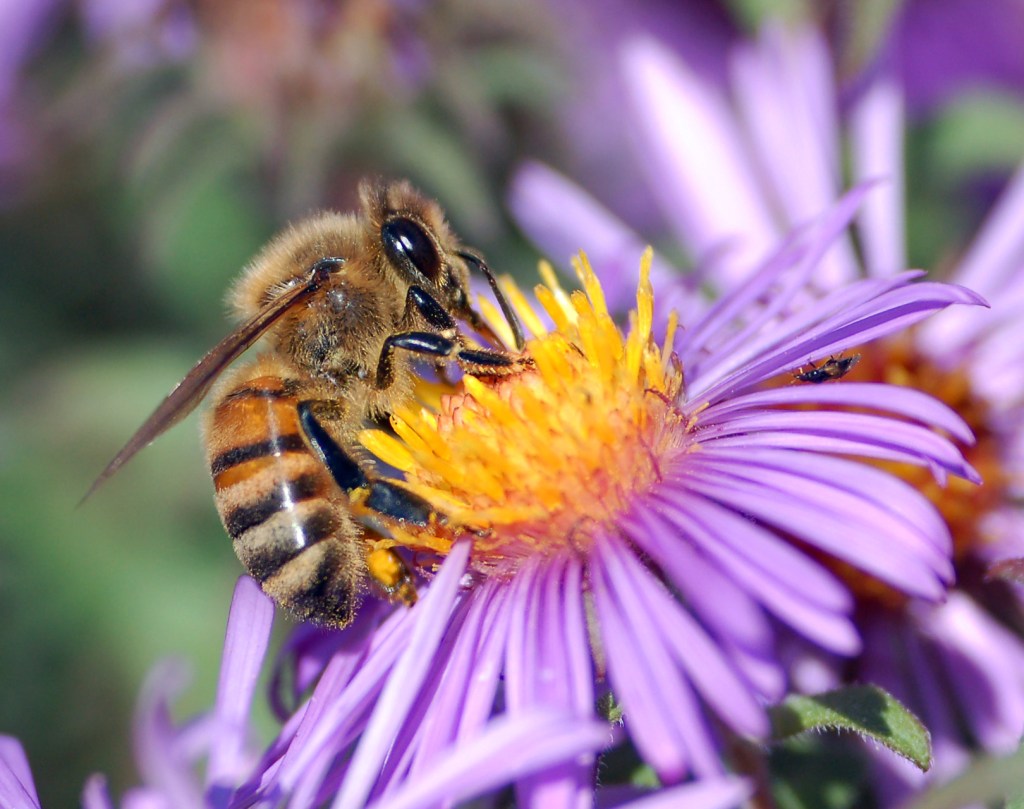
When was the last time you visited your local park? What flowers did you see? Were there bees on those flowers? Urban green spaces are important for many reasons. They bring joy to people nearby, provide opportunities for exercise, and help our mental health.
Pollinators benefit significantly from urban parks as they often have flowers which provide nectar. Insects like bees and butterflies often struggle to find food in concrete jungles, and might need more help than in those nature reserves. Bees in particular have experienced worrying declines in recent years. Urban sprawl and habitat destruction have limited their ability to feed and reproduce. Therefore, individuals must often adapt to survive in a human-centred environment.
Iberian Haven
This paper examined the role urban parks play in the survival of bees in an artificial habitat. The study site was the Spanish town of Viladecans, about 9 miles south-west of Barcelona. The chosen parks were a mix of habitats (e.g. woodland, mostly concrete, grass etc), sizes, and flora, but were all isolated and surrounded by the urban matrix.
The researchers sampled each park seven times from March to October. For every sample, as many flowers as possible were scanned for bees. They included all bee species in the recording, including the common honeybee (Apis mellifera). The data were used to measure two factors: nestedness and turnover.
Early Bee Gets the Nectar
A total of 169 species of bee were found over the seven parks. A wide variety of bee types were also recorded. This included digger bees (Amegilla spp.), bumblebees (Bombus spp.), cuckoo bees (Nomada spp.), and leaf-cutter bees (Megachile spp.) among others.
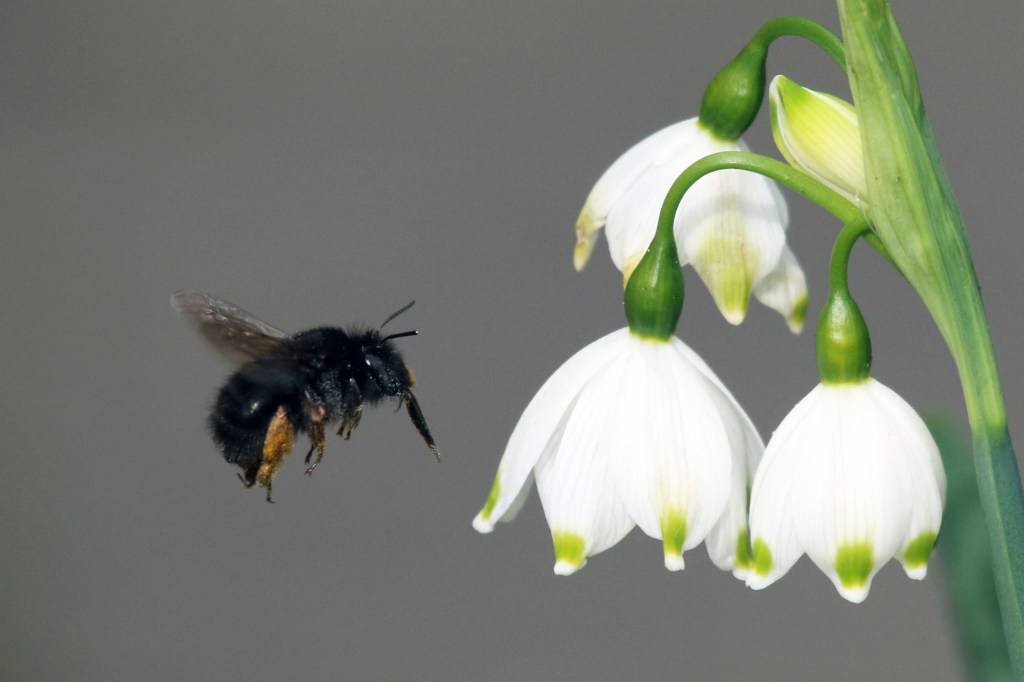
Hairy-footed flower bee, a fast-flying ground-nesting (digger) bee commonly found in early spring. Photo by Charles J. Sharp, CC BY-SA 3.0, via Wikimedia Commons.
The results showed that the species richness in urban parks was lower than natural areas, but only in the late season (July-October). In addition, the communities in parks were not just a nested subset of those in natural areas, but in fact were unique to the urban environment. This was because urban parks had high turnover of species. The species composition in parks was more diverse overall than in the natural areas.
Desert Oasis
Some species of bee were associated strongly with either parks or natural areas. These were called idiosyncratic species. Over 30% of all species recorded were idiosyncratic. These idiosyncratic species were also rare in both abundance and distribution. This means that the urban parks acted as refuges for rare bee species idiosyncratic to the urban habitat. Some species were even unique to specific parks! This tells us that urban parks can host specific bee communities largely separate to those in natural areas.
More bees were recorded in the early season than in the late season. This is because the peak flowering period falls in the spring and early summer, and so there is more food available. There was actually no difference in species richness between urban parks and natural areas during the early season.
This was contrary to the researchers’ initial hypothesis. This suggests that urban parks can be as suitable as natural areas for hosting bee communities during the flowering peak. The effect of flower diversity also had a significant impact on bee species richness. The researchers found that for every additional flower species, there was on average a 4.35% increase in the number of bee species.
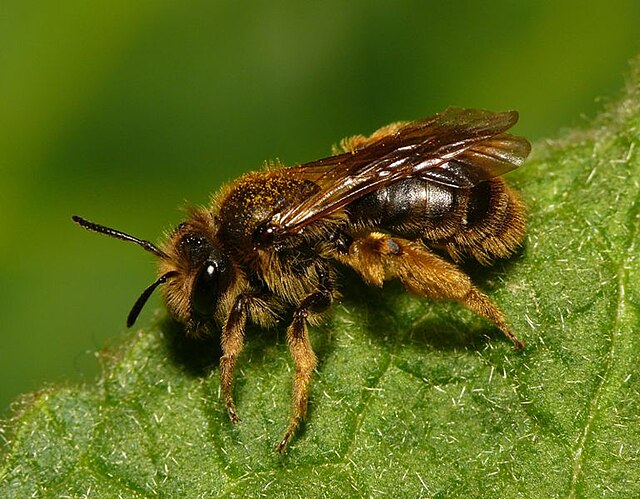
A solitary mining bee (family Andrenidae) that nests in the ground and is often associated with specific flowering plants. Photo by Dick Belgers, CC BY 3.0, via Waarneming.nl.
Implications for City Planning
Through these findings, the study has highlighted the immense value urban parks bring for specialist bee species. The study suggested three ways city planners can help urban bees:
- To design a network of urban parks scattered around the city. Each must be large enough to ensure population viability, and be close enough to other parks to allow population connectivity.
- To document and monitor bee species in urban parks. This helps us keep track of population size and species richness. Recording is also important in long-term projects to record the effects of conservation measures.
- To provide enough flower species in parks, so even specialist species can survive. This is also a good way to support other insects like butterflies, which have larval host plants unique to each species.
The Bigger Picture
Metapopulation studies like this one are extremely valuable for urban insect conservation. The findings can help influence city policy to protect green spaces which ultimately benefit both people and wildlife.
By studying our urban insects we can learn to appreciate the smaller residents of cities and towns. So, the next time you visit your local park, take a closer look at the flowers: there could be living jewels hiding amongst the rough.
Paper reference
Hernández-Castellano C, Aguilar M, González E, et al. (2026) Bee diversity patterns in urban and adjacent natural ecosystems: high species turnover makes urban parks biodiversity refuges. Urban Ecosyst 29:93. https://doi.org/10.1007/s11252-026-01937-1


Leave a Reply