
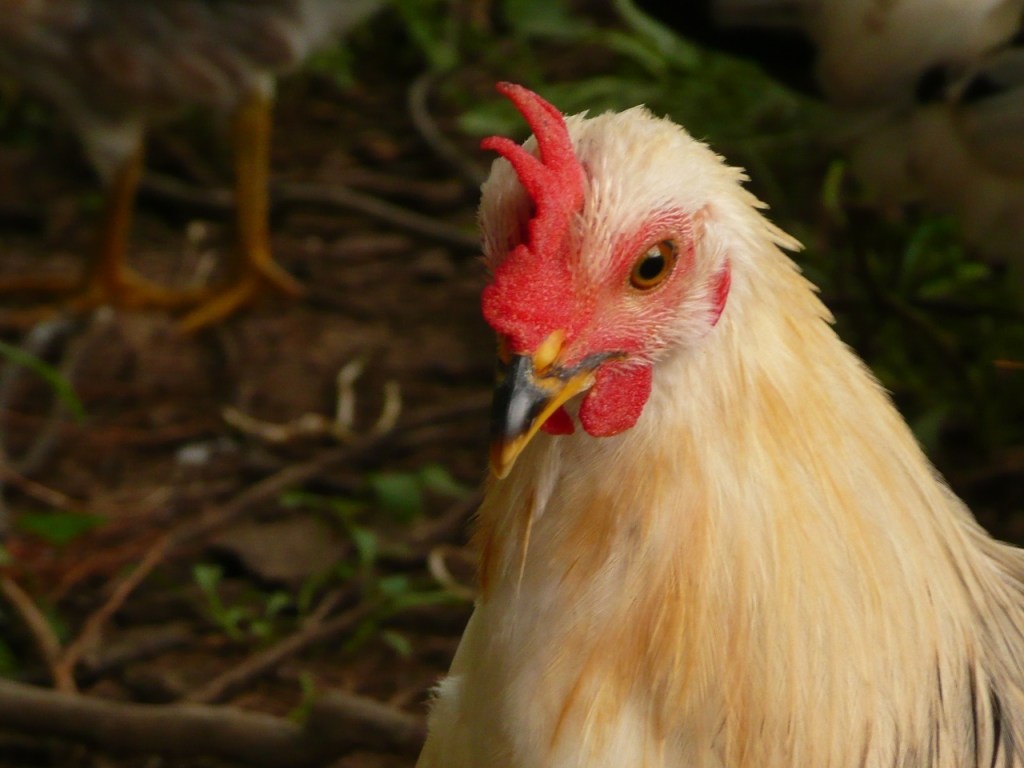
The most important bird in mosquito control isn’t a predator
If you’re into bugs, you probably already know the usual suspects: Aedes aegypti spreading dengue in backyards, Culex mosquitoes quietly carrying West Nile virus across entire continents, or the deadly Anopheles in Africa. The mosquitoes get all the attention, and so do the standard tools for tracking them: mosquito traps scattered across town, virus testing on pools of mosquitoes, and hospitals tallying human cases. But tucked away in small wire coops across Florida, an unexpected animal is doing some of the most critical work in disease surveillance. It doesn’t eat mosquitoes. It doesn’t repel them. In fact, the whole point is that it gets bitten. Meet the sentinel chicken: a living, clucking early warning system for mosquito-borne disease.
Why would anyone use a chicken to fight disease?
Viruses like West Nile (WNV), Eastern equine encephalitis (EEE), and St. Louis encephalitis (SLE) cycle between wild birds and bird-feeding mosquitoes in nature. Humans only become at risk when certain mosquito species that bite both birds and mammals carry the virus out of that loop and into contact with people. In Florida, Culex nigripalpus is one of the main species that does this, shifting from feeding on birds to feeding on mammals as rainy season conditions change. The critical question for mosquito control isn’t if these viruses are out there. It’s where and when. That’s where the chickens come in.
When an infected mosquito bites a sentinel chicken, the bird’s immune system fights back by producing antibodies, proteins that recognize and target the virus. This immune response, called seroconversion, shows up on a blood test. The key is that chickens never get sick from these viruses and never build up enough virus in their blood to pass it along to other mosquitoes. They are a dead end for the virus but a green light for surveillance teams: if a chicken tests positive, infected mosquitoes are active in that area.
How does sentinel chicken surveillance work?
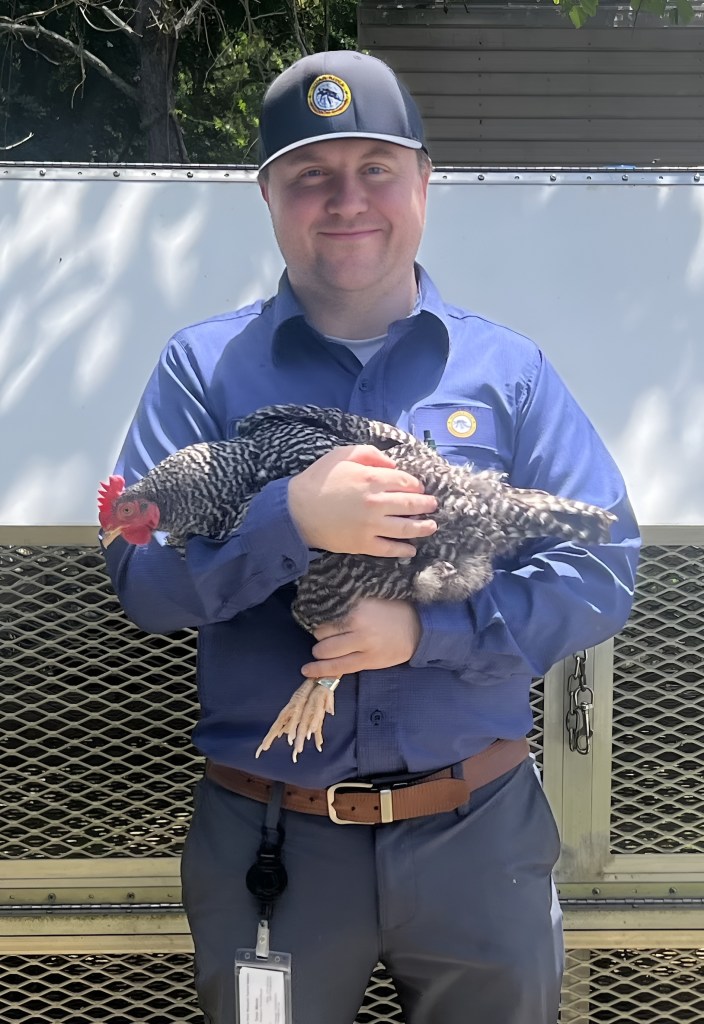
Mosquito control districts keep small flocks at fixed outdoor sites across their service area. At the Indian River Mosquito Control District (IRMCD) in Vero Beach, Florida, eight sentinel sites house six chickens each. Technicians check the coops at least three times a week and draw blood from every bird once a week. Those samples are screened in the lab using a test called ELISA (Enzyme-Linked Immunosorbent Assay), which detects virus-specific antibodies. Because chickens can develop detectable antibodies within about 7–10 days of an infected bite, weekly sampling gives mosquito control a near real-time picture of where transmission is happening. If a bird tests positive, crews know exactly where to focus spraying and other control efforts. After about six months in the field, sentinel chickens are retired and rehomed to community members and local farmers.
Sentinel chickens are going global
This isn’t just a Florida thing. Sentinel chickens have been used in Australia for decades, and they are now gaining traction in Europe, where West Nile virus has been expanding rapidly (Erazo et al., 2024) as warming temperatures create more favorable conditions for mosquito expansion. In a 2024 study, Streng and colleagues in the Netherlands sampled chickens at petting zoos and backyard flocks near areas where WNV had been detected the year before. They found that chickens had developed antibodies to both WNV and a closely related virus called Usutu virus. The remarkable part? That virus activity had gone completely undetected by every other surveillance method, including mosquito testing, wild bird monitoring, and human case tracking. The study showed that chickens living in everyday community settings can catch what high-tech surveillance misses.
Does sentinel surveillance actually make a difference?
Florida’s 2025 arbovirus (arthropod-borne virus) season recorded over 300 sentinel chicken positive tests for WNV statewide, alerting dozens of counties to active virus circulation. That data feeds directly into the Florida Department of Health’s weekly arbovirus reports, which trigger public health advisories and targeted mosquito control operations. In a forthcoming Scientific Reports study, Akshay and colleagues used decades of Florida sentinel chicken data combined with weather and land cover information to build models that can predict EEE outbreaks before they happen.
Sentinel chickens are one piece of a broader strategy that includes mosquito trapping, virus testing, and dead bird reporting. But from the swamps of Florida to the petting zoos of the Netherlands, these unassuming birds remain one of the most reliable and affordable tools we have for spotting dangerous viruses before they reach people. In mosquito control, the best offense is a good early warning, and it turns out the best early warning has feathers.
References
Akshay, V. A., Baecher, J. A., Burkett-Cadena, N., Thorson, J. T., Sánchez, Y., Tavares, Y., Bauer, A., Guralnick, R., & Campbell, L. (2026). Linking hosts, landscapes, and climate to advance zoonotic arbovirus forecasting. Scientific Reports. https://doi.org/10.1038/s41598-026-46902-2
Erazo, D., Grant, L., Ghisbain, G., Marini, G., Colón-González, F. J., Wint, W., Rizzoli, A., Van Bortel, W., Vogels, C. B. F., Grubaugh, N. D., Mengel, M., Frieler, K., Thiery, W., & Dellicour, S. (2024). Contribution of climate change to the spatial expansion of West Nile virus in Europe. Nature Communications, 15(1), 1196. https://doi.org/10.1038/s41467-024-45290-3
Florida Department of Health. (n.d.). Mosquito-borne disease surveillance. https://www.floridahealth.gov/statistics-data/population-surveillance/arbovirus-surveillance/
Indian River Mosquito Control District. (n.d.). Sentinel program. https://www.irmosquito.com/sentinel-chickens
Streng, K., Atama, N., Chandler, F., Blom, R., van der Jeugd, H., Schrama, M., Koopmans, M. P. G., van der Poel, W. H. M., & Sikkema, R. S. (2024). Sentinel chicken surveillance reveals previously undetected circulation of West Nile virus in the Netherlands. Emerging Microbes & Infections, 13(1), 2406278. https://doi.org/10.1080/22221751.2024.2406278


Leave a Reply