
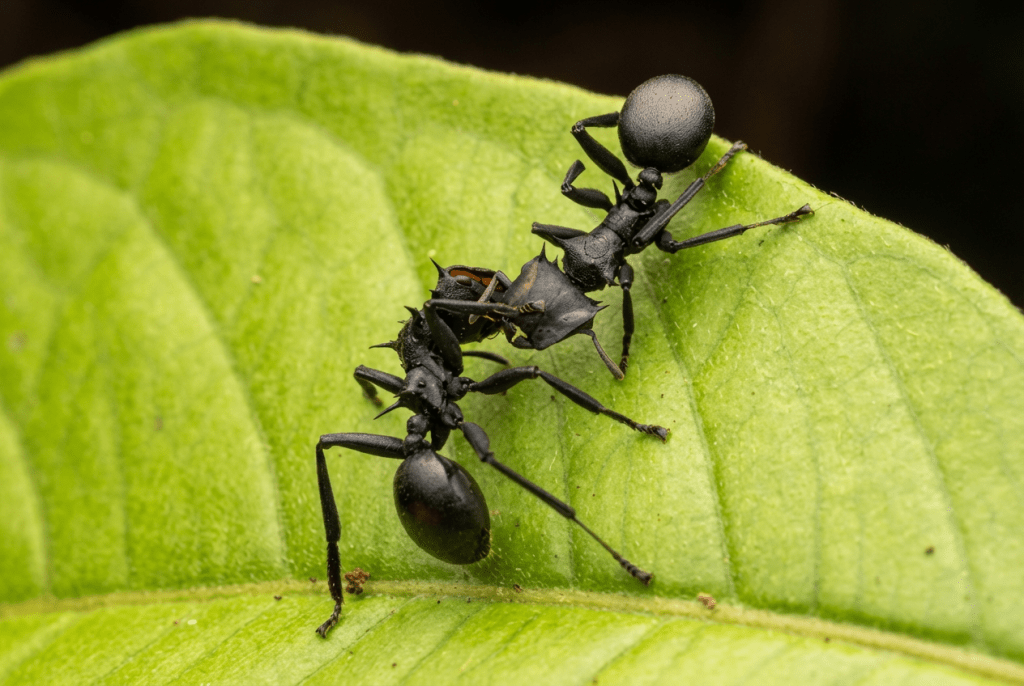
Insects have often been a major source of inspiration, fear, and human curiosity. Their anatomy, behaviour, lifestyles are highly specialised and distinct from ours and many other animals. This sense of ‘otherness’ has links in all areas of human expression but there is a particularly prevalent connection insects and gothic culture.
By looking into these overlapping traits, we can explore how insects have impacted human communities and subcultures, and in particular how gothic subculture has been shaped by the natural world.
Like Bram Stoker’s classic gothic literature ‘Dracula,’ many insects have been known to be hematophagous, sustaining themselves on blood. While obvious examples include mosquitoes and lice, many families of insects have bloodsucking species. For example, the genus Calyptra, known as the ‘Vampire Moths’ have specialised mouthparts to pierce the skin of fruits, but some species within the genus are blood-feeders, and have been known to drain the blood of researchers! The Dracula ant Stigmatomma, not only shares its common namesake with the Count, but earned this name through their tendency to ‘farm’ their larvae, harvesting blood from brood within the colony to sustain themselves.
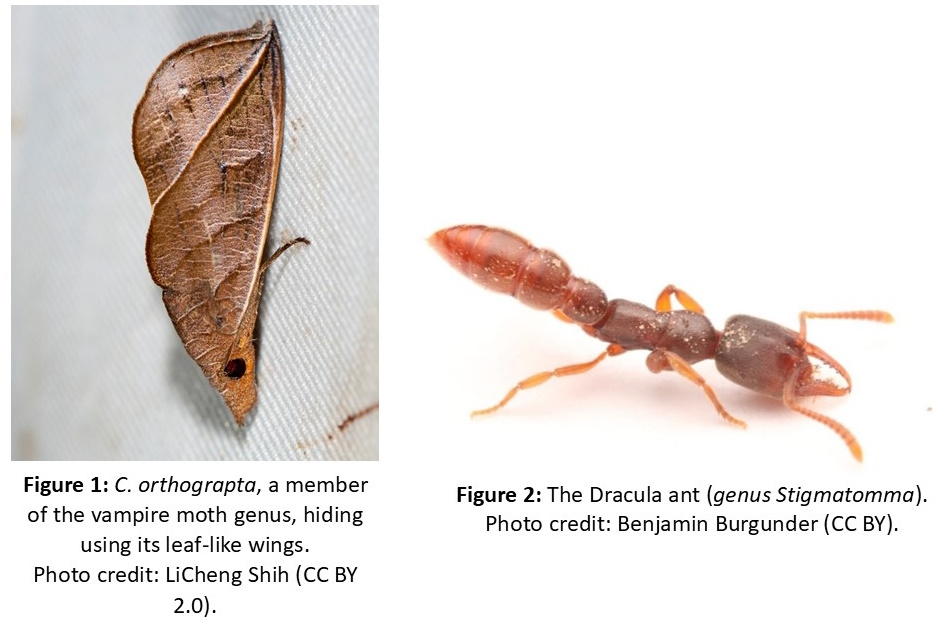
Parasitism is a common theme throughout gothic literature, with both ‘Dracula’ and Richard Marsh’s ‘The Beetle’ depicting examples of parasitic exploitation, drawing life from their hosts or using them for their own personal gain. Parasitism is utilised by many insect species, with the majority in the family Hymenoptera. For example, Pepsis is a genus of parasitoid wasps known commonly as ‘Tarantula Hawks’ due to their behaviour in which they hunt down tarantulas, paralyze them, and drag them back to their nests where they lay eggs on their living prey, for their larvae to eat them alive.
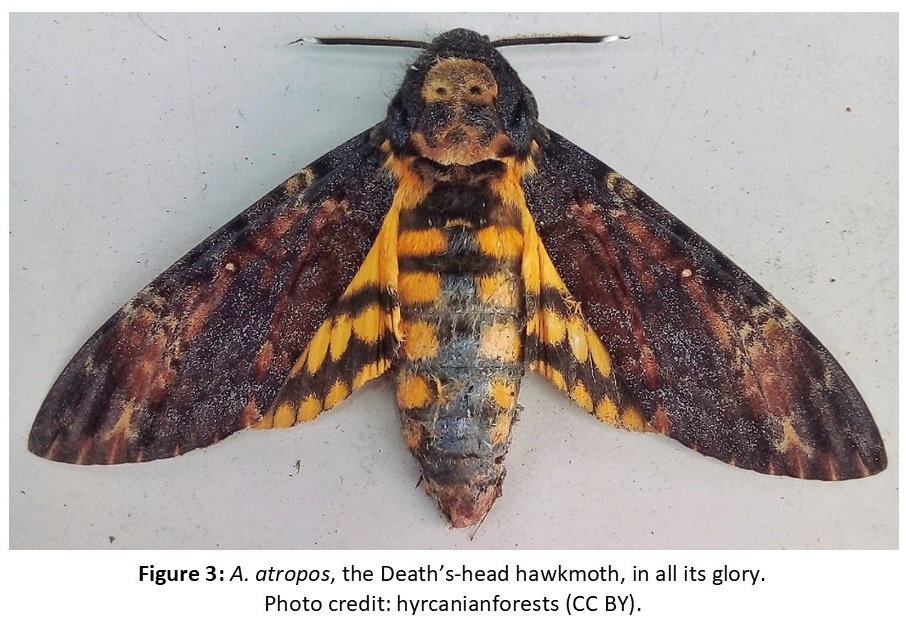
The traditional gothic appearance is one heavily inspired by the insect world, specifically aposematism. This defence mechanism, in which bright colours and patterns are used to warn potential predators of toxicity or danger, are utilised in fashion through the use of bright white face paint and eccentric outfitting. The Deaths Head Moth (Acherontia atropos) is a clear example, and its appearance in gothic literature, specifically Edgar Allen Poe’s ‘The Sphinx’, provides the perfect explanation for the incorporation of aposematism into gothic subculture, wherein he commends this ‘terrific’ animal with causing a ‘feeling of horror and awe — with a sentiment of forthcoming evil’. This gothic inspiration from aposematism provides a way to create a distinct, visually striking appearance, while staying connected to the natural world.
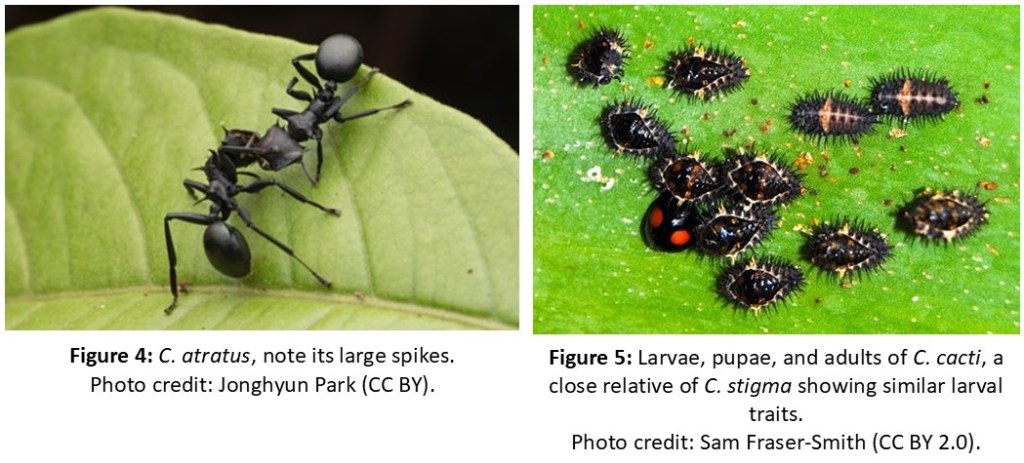
Spines, spikes and studs are highly prevalent in both insect body plans and alternative cultures, the turtle ant (Cephalotes atratus) being a prime example. They feature large spines down their head and thorax, reminiscent of spikes and studs you may find on punks, similarly used to indicate a warning to ‘stay away’ and ‘don’t touch’. Another great example includes the larval stage of many insects; the twice stabbed lady beetle (Chilocorus stigma) demonstrates these spiked physical defences, with their 4th instar featuring large impressive black spines.
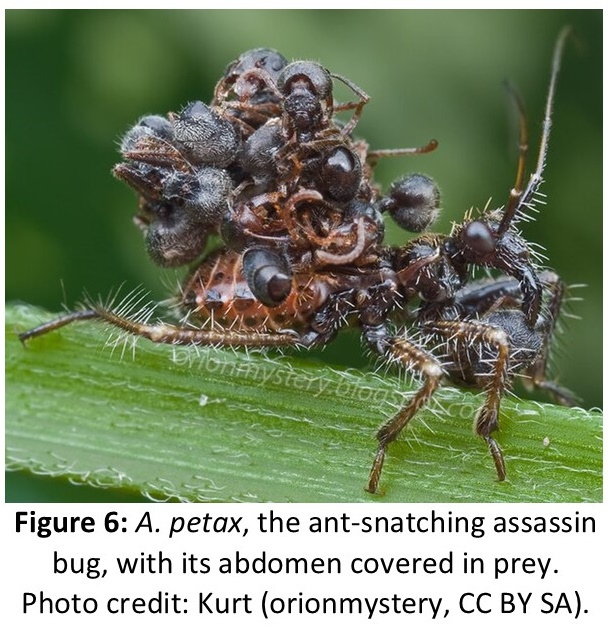
The ant-snatching assassin bug (Acanthaspis petax) is another one to watch out for, as nymphs they predate on ants, and stack their carcasses atop their back, camouflaging themselves amongst the dead and ambushing prey when they least suspect it. Gothic fashion reflects this trend towards death and the macabre, often with makeup simulating that pallid corpse-like look, incorporating religious imagery and even real specimens in the form of jewellery, such as Victorian scarab bracelets.
The overlap between gothic cultures and insects is one that has been represented in multitudes of alternative pop-culture and literature, such as David Cronenburg’s classic horror ‘The Fly’, the feeling of societal estrangement explored in Franz Kafka’s ‘The Metamorphosis’, and the use of insects, notably beetles and butterflies in costume design for Guillermo del Toro’s retelling of the classic gothic tale of ‘Frankenstein’. Not only have these stories gone on to inspire alternative culture, but each owes their inspiration to the incredible insects that we share our world with.
The parallels between gothic culture and the insect world are numerous, occupying the same hidden underbellies, darkened crevices in cities, and shuffling through overgrown graveyards, all the while inspiring curiosity or fear in the average passerby. This inspiration helps convey the same tragic stories of ghoulish behaviour and harrowing tales of possessions, often exhibiting similar characteristics: bold colours, dramatic silhouettes, and macabre accessories that develop the striking and beautiful appearances within our worlds.
Figure References
Figure 1:
Shih, L. (2015). Calyptra orthograpta. Wikimedia Commons. Available at: https://commons.wikimedia.org/wiki/File:Calyptra_orthograpta_(28676129685).jpg
Figure 2:
Burgunder, B. (2021). Photo 122183154. iNaturalist. Available at: https://www.inaturalist.org/photos/122183154
Figure 3:
Tahaei, E. (2025). Photo 586640257. iNaturalist. Available at: https://www.inaturalist.org/photos/586640257
Figure 4:
Park, J. (2020). Photo 96223781. iNaturalist. Available at: https://www.inaturalist.org/photos/96223781
Figure 5:
Fraser-Smith, S. (2007). Chilocorus cacti – larvae, pupae and adult. Wikimedia Commons. Available at: https://commons.wikimedia.org/wiki/File:Chilocorus_cacti_-_larvae,_pupae_and_adult_(2544224687).jpg
Figure 6:
Orionmystery (2013). Acanthaspis petax nymph with ant prey. Wikipedia. Available at: https://en.wikipedia.org/wiki/Acanthaspis_petax#/media/File:Acanthaspis_petax_nymph.jpg
Article References
Bänziger, H. (1968). Preliminary observations on a skin-piercing blood-sucking moth (Calyptra eustrigata). Bulletin of Entomological Research, 58(1), pp.159–163. https://doi.org/10.1017/s0007485300055942
Poe, E.A. (2014). The Sphinx. CreateSpace.
Sanchez, C. (2025). Inside the Making of Guillermo del Toro’s Frankenstein Costumes. Harper’s BAZAAR. Available at: https://www.harpersbazaar.com/culture/film-tv/a69180730/frankenstein-kate-hawley-costume-designer-interview-2025/
Today, E. (2015). Vampire Moths Suck the Blood of Vertebrates, Including Humans. Entomology Today. Available at: https://entomologytoday.org/2015/10/30/vampire-moths-suck-the-blood-of-vertebrates-including-humans/


.jpg)
.jpg)

Leave a Reply