
Pollination
-
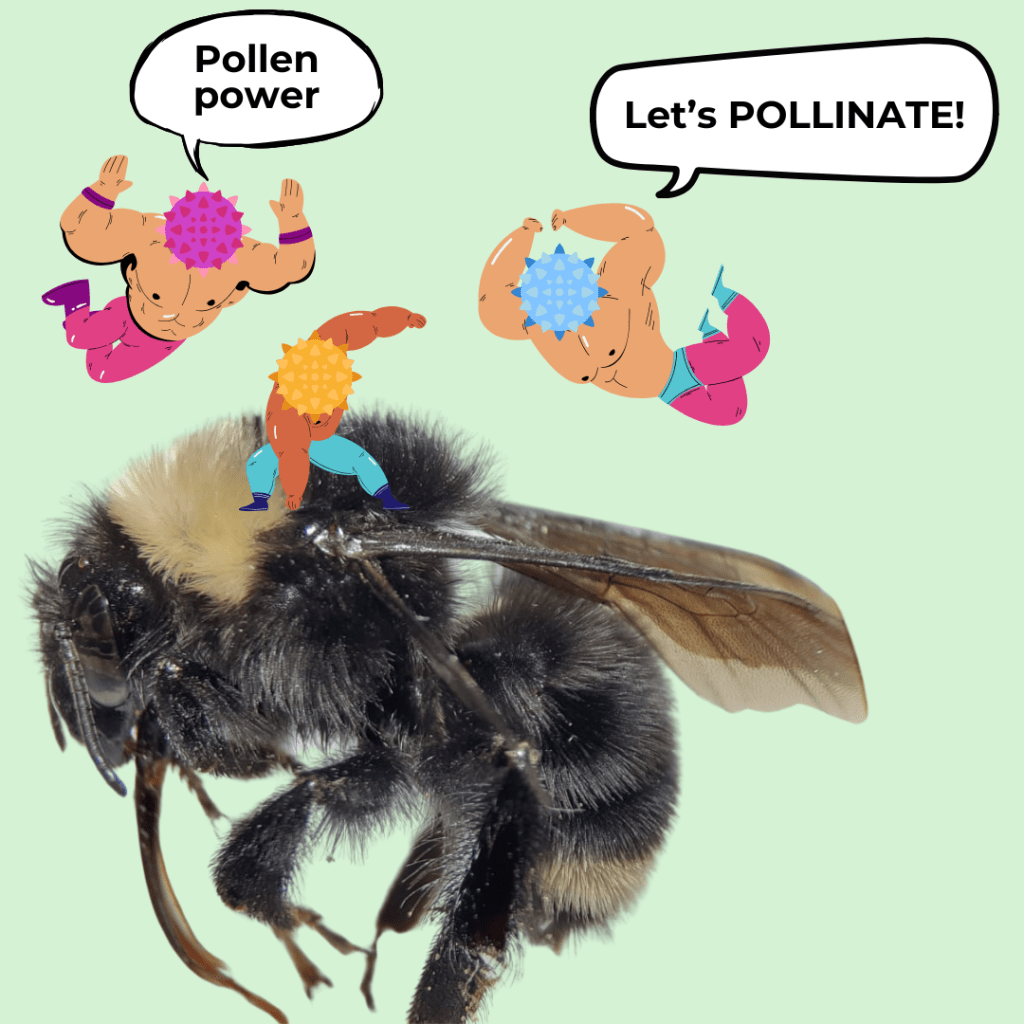
Imagine you’re a tiny grain of pollen riding on the back of a bumblebee. Your mission is to reach another flower so you can help complete the process of pollination. You’re not alone, about 500 other pollen grains are traveling right beside you, and all of you are competing to reach the flower first. How…
-

When plants reproduce, the pollen is produced by the male organs, anthers, to fertilize the egg. This pollen is dust that can be moved to the female organ by wind, water or by animals. Since the upper Jurassic period, relationships between plants and insects have formed called mutualisms, where the insect will move the pollen…
-
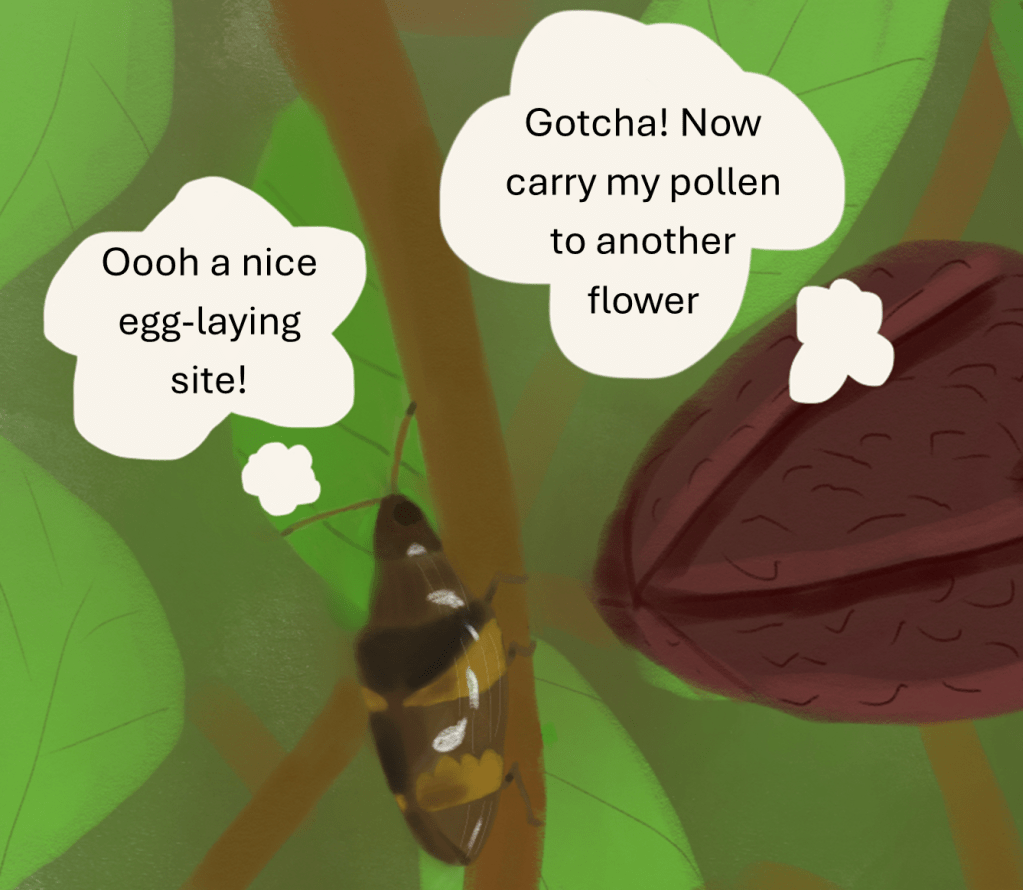
Original article: https://besjournals.onlinelibrary.wiley.com/doi/full/10.1111/1365-2745.14446 When we think of pollination, we picture a beneficial relationship between plant and pollinator: one gains sweet nectar and protein-rich pollen, the other can reproduce and spread their population. Everyone’s happy. But it isn’t always this straightforward: the world of pollination is full of tricksters. Many plants can deceive pollinators into spreading…
-

Photograph of a Blue Butterfly, credit Tony Hisgett 2010
 EntoBites