
Uncategorized
-

When plants reproduce, the pollen is produced by the male organs, anthers, to fertilize the egg. This pollen is dust that can be moved to the female organ by wind, water or by animals. Since the upper Jurassic period, relationships between plants and insects have formed called mutualisms, where the insect will move the pollen…
-
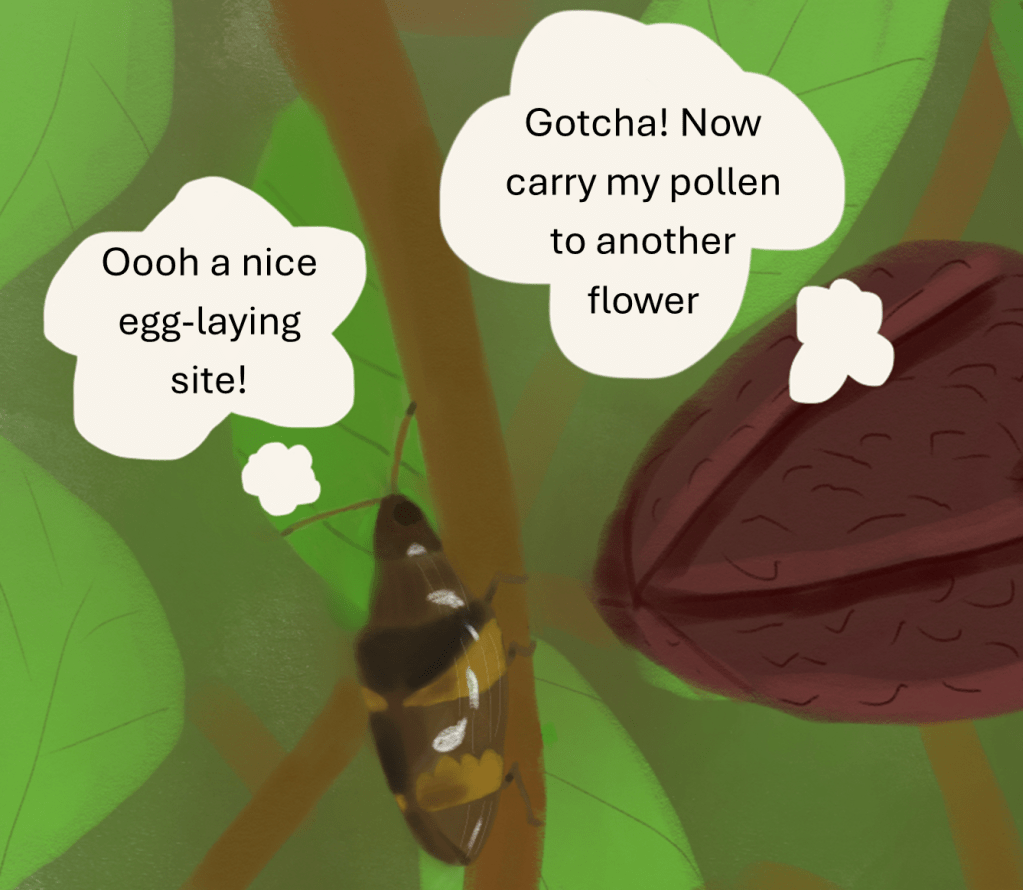
Original article: https://besjournals.onlinelibrary.wiley.com/doi/full/10.1111/1365-2745.14446 When we think of pollination, we picture a beneficial relationship between plant and pollinator: one gains sweet nectar and protein-rich pollen, the other can reproduce and spread their population. Everyone’s happy. But it isn’t always this straightforward: the world of pollination is full of tricksters. Many plants can deceive pollinators into spreading…
-

In celebration of the International Day of Women and Girls in Science, this article tells the stories of a few of the many amazing women entomologists from history. Despite often facing poor access to education, societal pressures to pursue more ‘feminine’ occupations, and marginalisation from the scientific community, these women made huge contributions to the…
-

Photograph of a Blue Butterfly, credit Tony Hisgett 2010
-

Original Article: https://www.nature.com/articles/s41467-024-44785-3 Have you ever wondered why insects always fly into your house when you leave a light on? With records showing light traps being used to trap insects in the Roman era shows just how long this has been known (Ford 1955; Gardiner 1995). Researchers often utilise artificial light to survey insect populations…
 EntoBites