
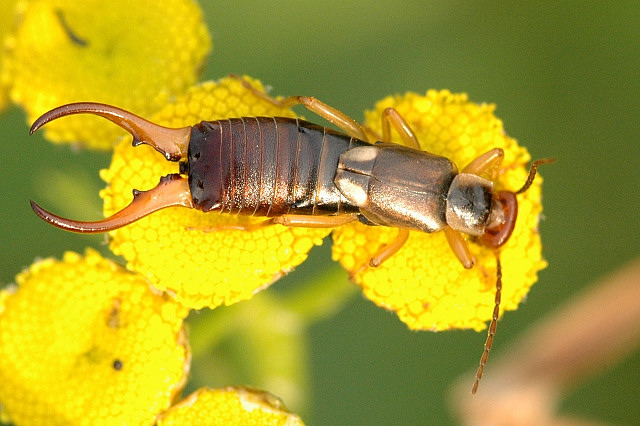
‘ear me out… The Truth About Earwigs
If you’ve ever stopped to think about the common names that we give insects, you may notice something a bit odd. Many of them are simply wrong. Some come from myths, others from mistaken identity, and a few seem to contradict basic biology altogether. By combining entomology (the study of insects) with etymology (the study of the origin of words), we can uncover the strange and often misleading stories behind these everyday names.
An Unearned Reputation
Few insects suffer from a worse reputation than the earwig; the name alone suggests something unsettling: a creature that crawls into human ears. The idea has lasted for centuries, but it is not supported by modern science. Earwigs do not seek out ears, and they do not burrow into brains.
The name “earwig” comes from the Old English ēarewicga, where ēare means “ear” and wicga refers to an insect or crawling creature. The term appears in written English before the 12th century, showing that this association goes back at least to the early medieval period. Similar names appear across Europe, including the German Ohrwurm and the French perce-oreille, both of which also reference the ear. This suggests that the idea of ear-related insect behaviour was a widespread belief rather than a local misunderstanding.
An Ear-ie Coincidence
Interestingly, earwigs do have a feature that may have reinforced this association. Their hindwings are normally folded beneath short forewings, but when unfolded they form delicate, fan-like structures that can resemble the human ear. Their scientific order name, Dermaptera, comes from Greek meaning “skin wings”, referring to these thin, membranous hindwings. However, there is no strong evidence that this influenced the original naming, and it is likely just an intriguing coincidence.
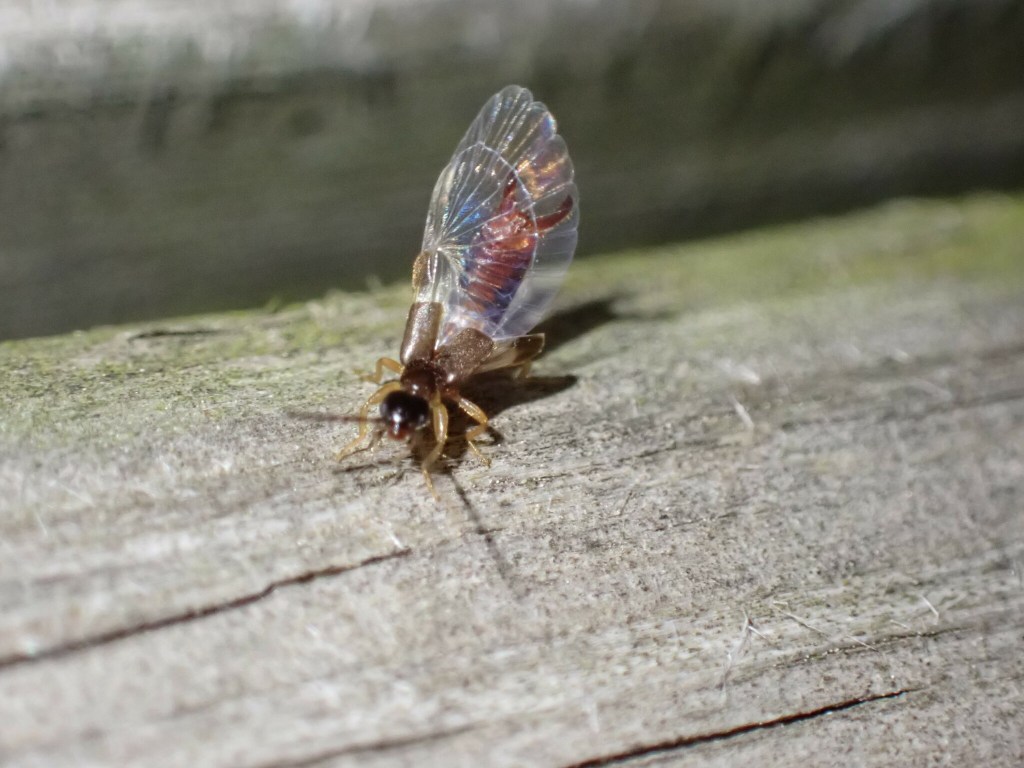
Earwigs are nocturnal insects that prefer dark and damp environments such as soil, leaf litter, and bark. These habitats are very different to the human ear. The persistence of the myth shows how easily imagined risks can take precedence, even when they do not match up with observed behaviours.
Get out of ‘ear! Separating myth from medical fact
There are a few medical reports that help to clarify how much truth there is behind this long-standing naming belief. In a documented case study, researchers describe a rare instance where an earwig was found inside the ear canal. However, they highlight how unusual cases like this are. Insects being found inside the ear is uncommon in general. The few rare cases typically involve opportunistic insects/arthropods such as cockroaches, other flying insects and spiders, instead of earwigs.
Earwigs appear in isolated reports and are not typical cases in broader clinical observations. Exact percentages are not available, but the evidence suggests that they account for well under 1% of insects-in-ear cases.
Why the names stick
If so many insect names are misleading, why have they not been changed? The answer lies in the difference between scientific names and common names. Scientific names are standardised and are based on evolutionary relationships. Common names develop through everyday use and are shaped by a mix of culture, language, and history. Once a common name becomes familiar, it tends to stick even if it is biologically inaccurate. In many cases these names tell us more about human thinking than about the insects themselves. Names reflect how people once tried to explain the natural world, often mixing observation with imagination.
Where language meets Science
Looking at insect names through both entomology and etymology gives us a different perspective. Naming is not just about science, but also about culture. While science aims for accuracy, language carries traces of older beliefs. This creates a useful opportunity for science communication. By questioning familiar names and exploring where they come from, we can spark curiosity and encourage people to look more closely at the natural world.
Final Thoughts
Insect names are not always what they seem. Earwigs do not crawl into ears, and many other species are just as misleadingly named, such as the ladybug and the Jerusalem cricket. This example highlights the quirks of language and the persistence of old ideas. By looking at insects through both a scientific and a linguistic lens, we can better understand not only the organisms themselves, but also the stories that we have told about them. These names are not just mistakes, they are part of how people have tried to make sense of the world, even when they got it slightly wrong.
References:
Jeong H., Shin J.E. and Kim C.H. (2021) Earwig Crawling in the Ear: Myth or Truth. Cureus, 13 (5), e14827. doi: 10.7759/cureus.14827.


Leave a Reply