
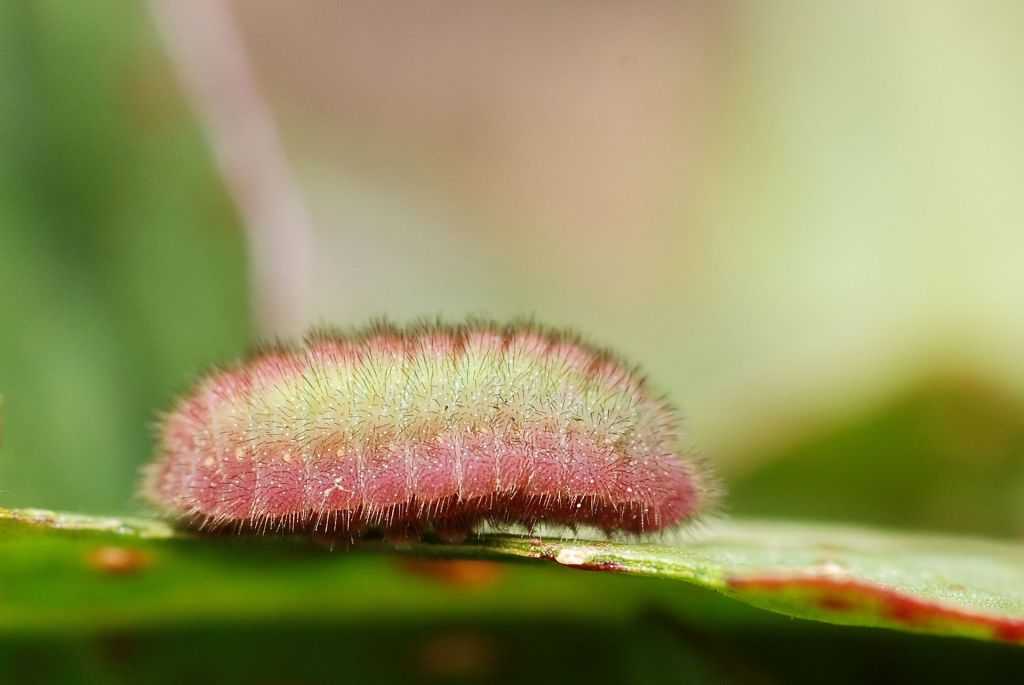
Have you ever seen a butterfly egg? Most people haven’t. When we think of young butterflies we most often imagine a munching caterpillar, decimating the leaves of its host plant. Its soft, wriggling body working its way down the leaf stem, bearing the lush foliage naked.
Each species of butterfly has one or more species of plant that their caterpillars feed on. These are called Larval Host Plants or LHPs. Scientific research on butterfly LHPs has helped ecologists to support threatened butterfly populations.
However, not all individual plants of a species are chosen for egg laying or oviposition. This means pregnant females must have a preference for which plants they oviposit on.
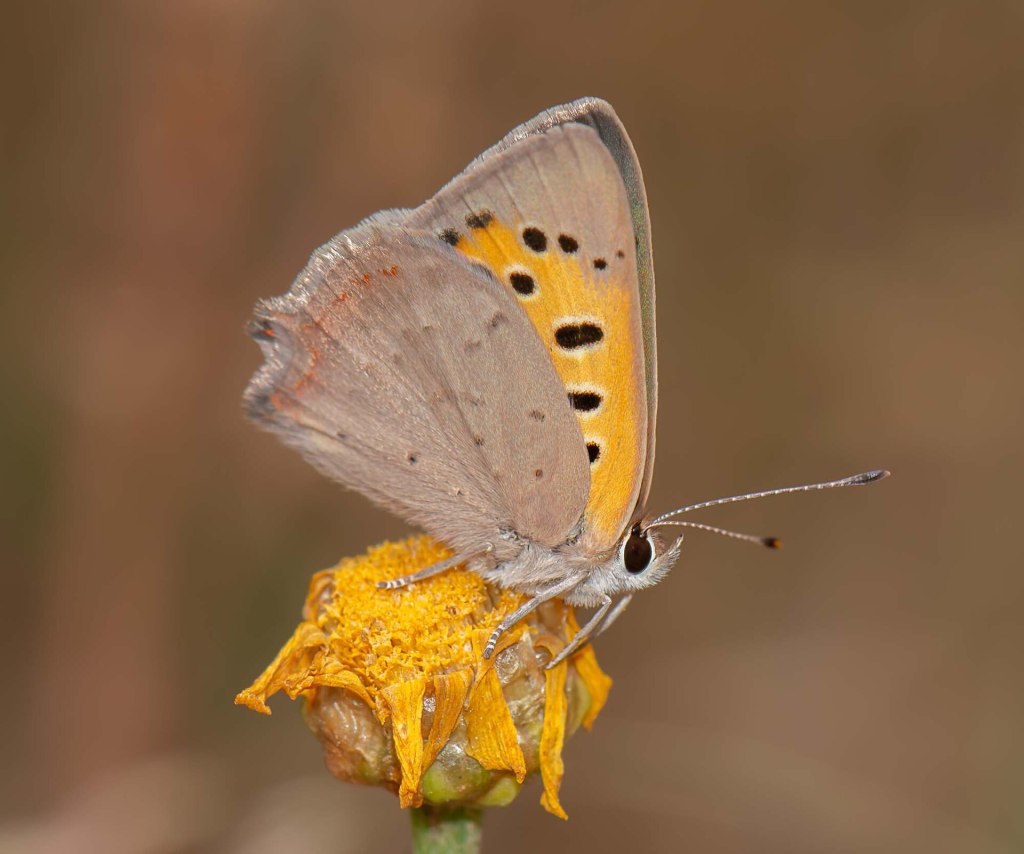
This is what three ecologists from the University of Oxford and the charity Butterfly Conservation set out to investigate. Their chosen species was the endangered Small Copper (Lycaena phlaeas). A pretty grassland butterfly with LHPs in the sorrel or Rumex family.
A Leopard-Spotted Beauty
The Small Copper can be found across the UK. However, it has suffered a significant and long-term decline in abundance of -41.5% since 1976. It lives in small colonies in open grasslands like those near Oxford, where this particular study took place.
The Small Copper is a multivoltine species which means individuals can reproduce multiple times a year. In contrast, univoltine butterflies like the Purple Emperor (Apatura iris) and the Red Admiral (Vanessa atalanta) only breed once per year.
Multivoltine butterflies are much more resilient to climatic changes because if eggs or larvae are wiped out by harsh weather, they have the opportunity to breed again.
High Nitrogen In Soil Increases Nutrient Quality
In high-nitrogen soil, sorrel plants grow more vigorously. The resulting dense vegetation has a cooler microclimate because sunlight cannot reach the leaves among the middle and base of the plant.
In soil with lower nitrogen, fewer plants grow but more sunlight can reach the ground, creating a warm microclimate.
PhD student William Langdon, University of Oxford ecologist Professor Owen Lewis, and Butterfly Conservation’s Head of Science Dr Richard Fox wanted to know if the Small Copper would prefer plants grown in high or low nutrient soil.
Data collection involved measuring vegetation density and size, amount of bare ground, and abundance of leaf litter around sorrel plants. This was done for every plant with eggs or larvae and its unoccupied neighbour. Later, chemical analysis determined the levels of nitrogen in the leaves of plants growing in low and high nutrient soil. Air and ground temperatures around plants were also taken. This was done in both the summer and the autumn.
They predicted that female butterflies would value plants with high fitness (high nutrient level) and accept a trade-off over a more comfortable temperature.
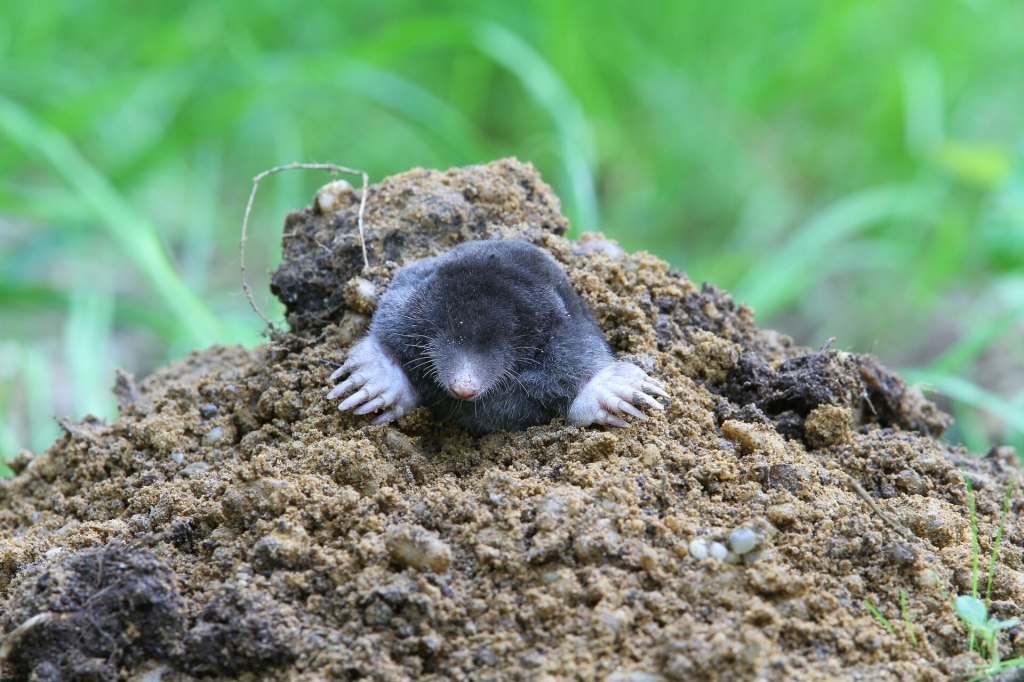
There were also some plants which had both high fitness and a warm microclimate. These plants grew in soil with high nitrogen, but the plant canopy was kept open due to frequent disturbance by European Moles (Talpa europaea).
The moles’ burrowing helps to prevent too many plants from growing, creating a warmer microclimate around the remaining plants. These plants seemed to decouple the trade-off between warmth and fitness and so were predicted to be the most favoured.
A Surprising Result
The results showed the complete opposite of the ecologists’ primary prediction! The butterflies preferred to oviposit on the plants with a warm microclimate, apparently tolerating the lower nutritional value.
This suggests that caterpillar development prioritises warmth over a higher quality food source. So, we can call the Small Copper a thermophilous insect.
The researchers’ prediction that areas of disturbance by moles would be more favoured was observed to be correct. The decoupled trade-off between warmth and nutrients in plants in mole-disturbed soil was positively associated with oviposition.
What Does This Mean For Conservation?
This is very helpful information for butterfly conservation because it helps us plan and manage grasslands during the summer and autumn when L. phlaeas lays eggs.
Instead of planting more sorrel plants, we now know that to support this butterfly we must allow plenty of sun to reach the ground by keeping individual plants thinly spaced out.
Also, the humble and often overlooked mole earned its moment in the sun. This study showed a fascinating example of commensalism. The butterflies benefited from the warmer microclimate created with help from disturbance by the moles.
The researchers also highlighted the threat from soil pollution. Because sorrel plants grow more densely in nitrogen-rich soil, too much nitrogen can make conditions unsuitable for oviposition.
Therefore, they predicted that nitrogen pollution in grasslands will likely exacerbate the decline in habitat of this beautiful butterfly and other insects dependent on grasslands.
How Can We Support The Small Copper?
This study has highlighted the most important component in successful butterfly conservation: a well-managed habitat.
We can create or maintain a good home for grassland butterflies, including the Small Copper, by designing grassland to fit their needs. In this case, preventing vegetation from becoming too overgrown.
A Jewel In The Grassland
This small and remarkable creature has given us an important insight into the complex inner workings of butterfly reproduction.
By continuing to study these insects, we are able to better support our fluttering friends to thrive in an increasingly unpredictable world.
References:
Langdon, W.B., Fox, R. and Lewis, O.T., 2026. Host plant use is driven by microclimate not nutritional quality in a grassland butterfly. Ecological Entomology. 1–13. [E-journal]. DOI: https://doi.org/10.1111/een.70076 .
BMS decline figure source: UKBMS. 2025. Small Copper. Available at: https://ukbms.org/species/small-copper .
 EntoBites
Leave a comment