
Ants are everywhere. They crawl across forest floors, march along sidewalks, and quietly build vast underground networks beneath our feet. These tiny insects live in highly organized societies where thousands of individuals work together to gather food, defend their colony, and care for their young.
But ants are not just excellent workers, they are also skilled builders. Across the world, different species construct a surprising variety of nests. Some dig intricate tunnel systems underground, while others build mounds of soil or live inside wood.
And then there are WEAVER ANTS, which take nest construction to a completely different level.
How Do Weaver Ants Build Their Nests?
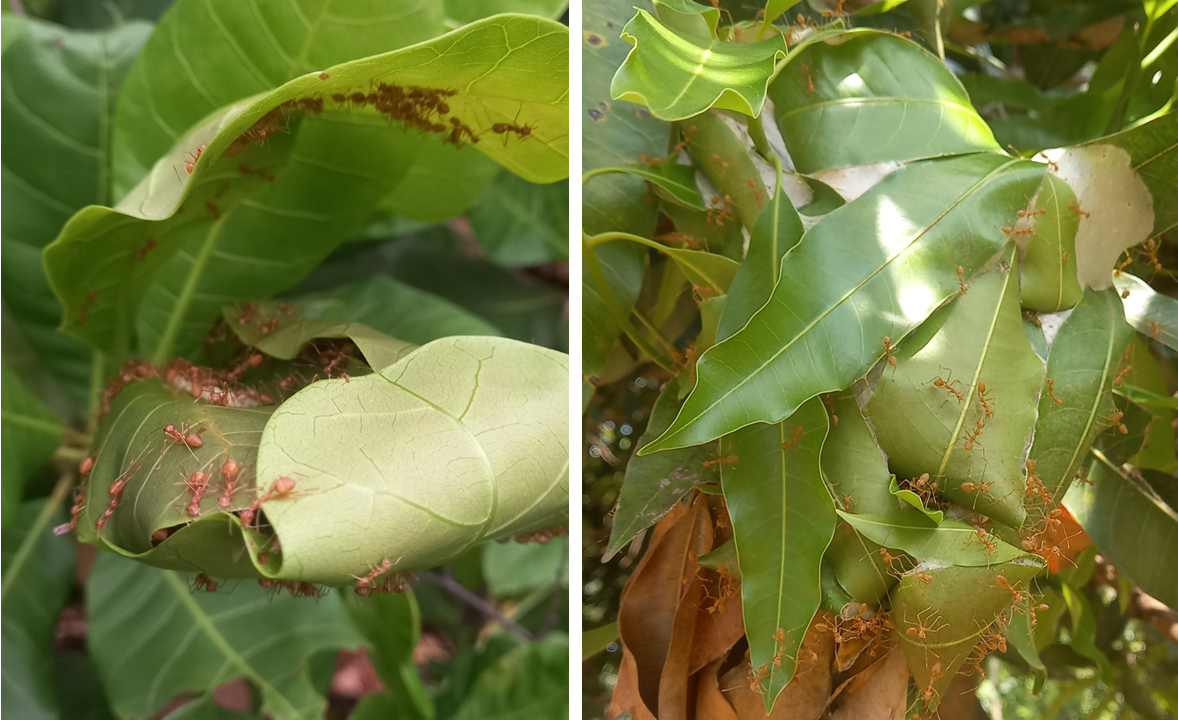
Weaver ants are famous for their unusual homes. Instead of digging underground or building soil mounds, these ants construct nests high in the canopy by weaving together living leaves.
Building these nests requires remarkable teamwork. Worker ants pull nearby leaves toward one another, sometimes forming living chains to bridge the gap between branches. While some ants hold the leaves in place, others begin the process of “stitching” them together.
But the ants don’t produce the stitching material themselves.
Instead, they use their larvae.
Workers carefully hold the larvae in their mandibles and press them against the edges of the leaves. When the larvae touch the leaf surface, they release silk. The workers guide this silk along the seams of the leaves, binding them together much like thread in fabric. Over time, the leaves become tightly fastened, forming a strong and flexible nest.
It is almost as if the ants are sewing their homes together except their thread comes from their own young ones.
Some Nests Start Small… and Grow
In a study by Kadambari Devarajan, the researchers investigated the structure and arrangement of the weaver ant nests to understand how these tiny builders organize their home in the tree canopy. This study examined 13 trees in two different locations and recorded a total of 71 nests across multiple trees and recorded factors such as nest size, position and environmental conditions too.
The nests varied greatly in size. Some were made from just a single folded leaf, while others were large structures made from dozens or even hundreds of leaves. The largest nests resembled green bundles hanging among the branches and could house hundreds of ants.
The researcher also found that ants continuously maintain their nests. Whether building a new nest, extending an existing one or repairing damage, the construction process follows the same basic method: leaves are pulled together and stitched using larval silk.
This constant repair work shows just how much effort ants invest in maintaining their homes.
Choosing the Perfect Place
Building a nest is only part of the challenge. The ants must also decide where to build it. To understand how ants choose nest locations, the study examined several factors, including tree structure, leaf size and environmental conditions such as temperature and wind.
The results showed that the characteristics of the tree itself play a major role. Trees with larger canopies tended to host more nests and nests were often positioned at particular distances from the trunk and from the ground. Leaf features such as size and shape also influenced where ants chose to build.
Environmental factors like temperature and wind appeared to be less important than the structure of the tree.
In other words, the ants seem to prefer places where the architecture of the tree makes nest construction easier and more stable.
Why These Tiny Builders Matter?
Weaver ants are more than just impressive builders. They are eusocial insects, meaning they live in highly organized colonies where individuals cooperate and divide tasks such as foraging, nest construction and caring for the brood like termites and honeybees. Their colonies can contain thousands of individuals spread across many nests within a tree canopy. These ants patrol the surrounding area and interact with many other organisms in their environment.
Because of their aggressive defense of territory, weaver ants are even used in some agricultural systems acting as predators of crop pests.
Understanding how these ants build and arrange their nests helps scientists learn more about how social insects interact with their environment and organize complex societies.
Small Builders, Big Lessons
The nests of weaver ants may seem simple at first glance – just clusters of leaves hanging in the branches. But a closer look reveals a sophisticated construction project powered by cooperation, communication, and their remarkable teamwork typical of eusocial insects.
Hundreds of ants working together can transform ordinary leaves into protective homes for their colony.
Sometimes, the most impressive architects in nature are only a few millimetres long.
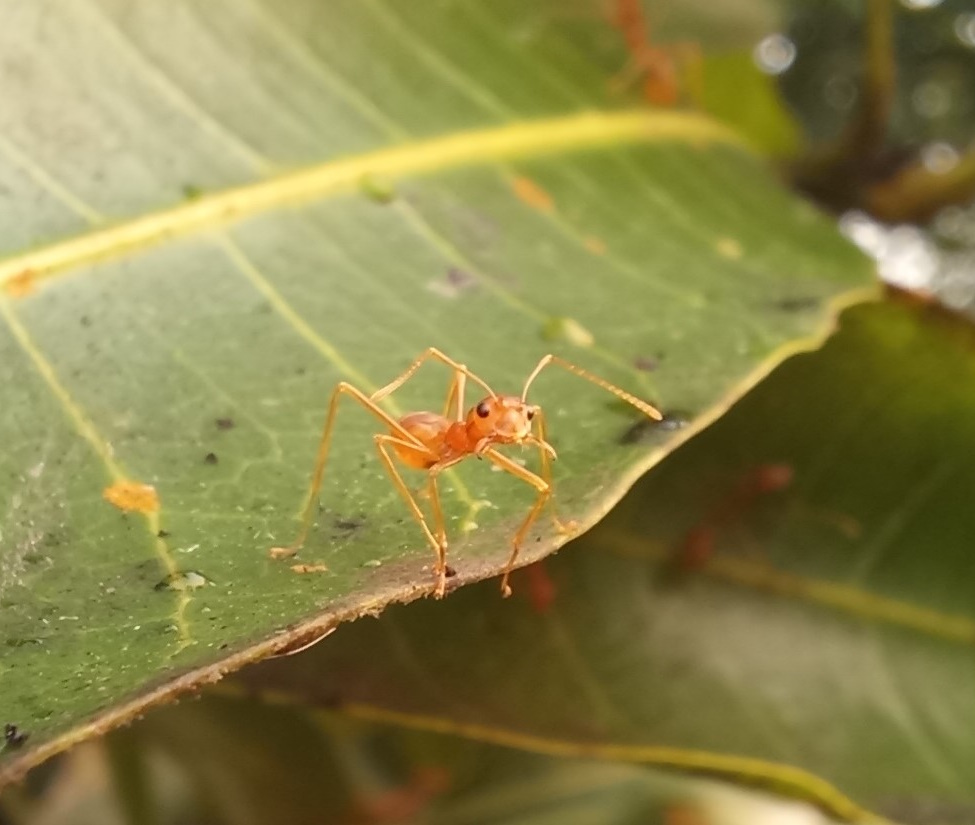
Featured Image: Weaver ant (Oecophylla smaragdina) exploring a leaf, tiny yet remarkable architects of the natural world. Photo by Shanmuga Priya
 EntoBites
Leave a comment