
In celebration of the International Day of Women and Girls in Science, this article tells the stories of a few of the many amazing women entomologists from history. Despite often facing poor access to education, societal pressures to pursue more ‘feminine’ occupations, and marginalisation from the scientific community, these women made huge contributions to the field of entomology, from scientific illustration and insect breeding, to pest control and disease vector management.
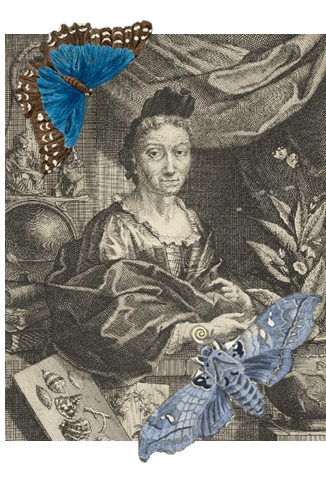
Maria Sibylla Merian (1647-1717)
Merian was a pioneering scientific illustrator and naturalist, one of the first to document insect metamorphosis, and the relationship between insects and plants, through stunning illustrations. She worked as a painter and engraver, passing on her skills to her two daughters, with whom she opened a studio in Amsterdam after divorcing her husband. In 1699, Merian travelled to Dutch Suriname on a scientific expedition, funded by sale of her art and a stipend from the Dutch government. She documented and illustrated insects at different stages of metamorphosis alongside their host plants, publishing Metamorphosis Insectorum Surinamensium after her return to Europe. Her notes include descriptions of the horrific conditions endured by local enslaved people, from whom she learned much about the local wildlife. The book brought completely new species to the Western world, and was studied by taxonomist Carl Linnaeus years after her death. Even today, Merian’s illustrations stand out, her detailed, painstaking study of insects and their host plants clear.
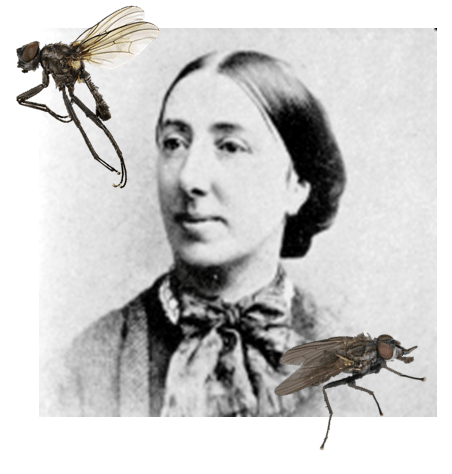
Emma Hutchinson (1820-1905)
An important figure in the Victorian entomological community, Emma Hutchinson, the wife of a vicar, reportedly became interested in entomology after her five year old son caught a moth. She was an expert in breeding Lepidoptera, rearing the insects from eggs to allow study of the full life cycle and provide quality specimens for collections. In particular, she bred the pinion-spotted pug moth (Eupithecia insigniata), a poorly studied species at the time, continuously for over thirty years! Although, as a woman, Hutchinson was not allowed to join her local naturalist society, she published in the Entomologist and Young Naturalist journals; her article Entomology and Botany as Pursuits for Ladies encouraged young women to study butterflies, rather than just collect them. In another article, she reports her efforts to conserve the declining comma butterfly (Polygonia c-album), paying local people to collect larvae and pupae to reintroduce into areas of low population. A variant of the comma, hutchinsonii, is named after her.

Eleanor Anne Ormerod (1828-1901)
Raised on a large estate in Gloucestershire, Eleanor Ormerod learnt about the importance of insects in agriculture from her management of the family farm. She was one of the first scientists in the field of agricultural entomology, paving the way for modern pest management. Although her interests were not encouraged by her family, after the death of her father in 1873, Ormerod published a series of annual Reports of Observations of Injurious Insects and Farm Pests, writing in a style accessible to agricultural workers. These were extremely popular, and she was known as one of the greatest authorities on pest management. Ormerod was invited to lecture at several universities, and worked as a consulting entomologist with the Royal Agricultural Society of England (although unpaid). The importance of Ormerod’s work was clearly felt during her time, as she became the first woman to receive an honorary law doctorate from the University of Edinburgh, and to receive fellowship of the Meteorological Society. In 1924, Virginia Woolf wrote a short story, Miss Ormerod, based on her life.
Margaret Fountaine (1862-1940)
Margaret Fountaine was a celebrated lepidopterist and traveller, collecting over 22 000 butterfly specimens from across the globe. An inheritance from her uncle gave her the independence and freedom to follow her interests and, over her life, she travelled to over sixty countries in Europe, the Middle East, South Africa, the USA, Central America, and Asia in search of new specimens and rare species. Fountaine published in The Entomologist and Transactions of the Entomological Society, providing detailed descriptions of the life cycles and host plants of her finds. Her beautifully illustrated sketchbooks documented the different life stages of many butterfly species new to science. The Royal Entomological Society elected Fountaine as a fellow in 1898, the only woman at the time, and she was accepted into the Linnean Society in 1912, a rare honour, highlighting her importance to fellow naturalists. She died aged 78 of a heart attack on an expedition in Trinidad, reportedly found on a mountain path with her butterfly net still in hand.
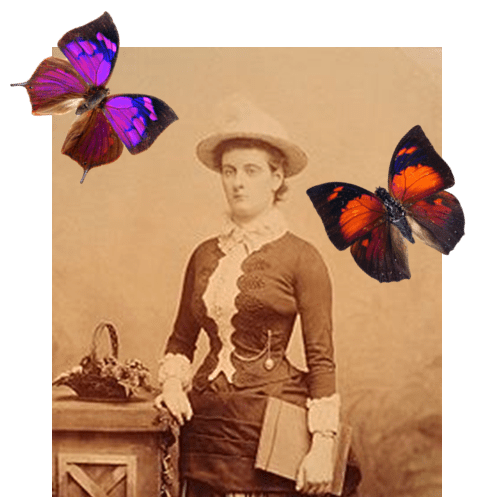
Edith Patch (1876-1954)
One of the first female professional entomologists in the United States, Edith Patch was a truly pioneering scientist. She was invited to teach at the University of Maine (an unpaid position) in 1903, where she worked towards establishing the university’s Department of Entomology, becoming an assistant professor the next year. Patch was a world specialist in aphids, publishing the comprehensive Food Plant Catalog of the Aphidae of the World, and studying the evolution of aphid wing veins for her PhD at Cornell University in 1911. As well as her research, Patch was interested in outreach and education, publishing entomologically-accurate children’s books, to share her enthusiasm for insects and inspire a love for nature. In honour of her achievements, she was the first woman to be elected president of the Entomological Society of America in 1930. Patch campaigned for recognition of the immense benefits of insects to humans, through their roles as pollinators, for example. In her 1938 essay, Without the Benefit of Insects, she highlighted the potential disastrous consequences of extensive use of chemical insecticides, a challenge we are facing today.

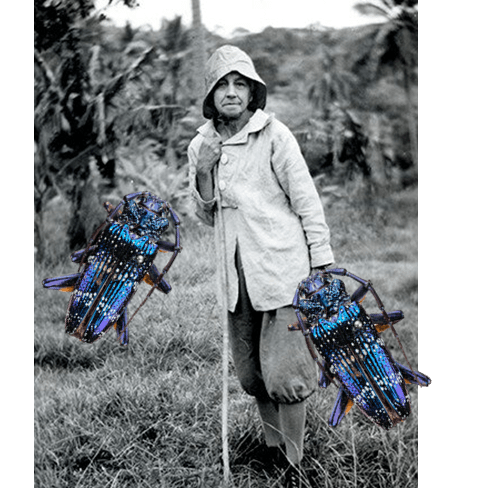
Evelyn Cheesman OBE (1881-1969)
Evelyn Cheesman was a daring entomologist and traveller, collecting approximately 70 000 specimens of plants, insects and other animals over her life. Unable to pursue her ambition of becoming a veterinary surgeon, she worked as a civil servant before becoming Assistant Curator of Insects at ZSL London Zoo in 1917, and the first female Insect House Curator in 1920. She was invited on a zoological expedition to the Galapagos Islands, where she learnt to preserve specimens for museum collections. Cheesman then dedicated her time to collecting specimens for the Natural History Museum, travelling alone to the South West Pacific, funded by the museum and sales of her books. She developed good relationships with Indigenous people, learning about local wildlife from them, and documenting ways of life which, even then, were beginning to disappear. Scientists are still finding new species in Cheesman’s collection, and gaining insight into the evolutionary history and biogeography of the islands she visited.
Ximena McGlashan (1893-1986)
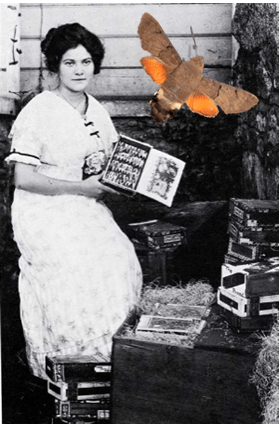
American entomologist and businesswoman Ximena McGlashan, alongside her father, started the first commercial butterfly farm in the USA in 1911. Known by newspapers as the ‘Butterfly Princess’, she worked long hours collecting and raising eggs, larvae and pupae. Ximena encouraged other women to start their own home butterfly farm businesses, and published a magazine, The Butterfly Farmer, aimed at inspiring amateur entomologists. In 1916, she used her earnings to study entomology at Stanford University.
Alwen M. Evans (1895-1937)
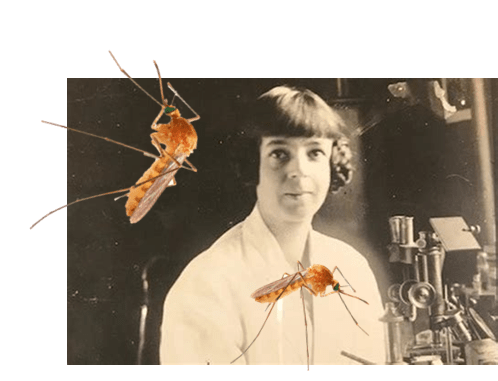
Alwen Evans was a world-renowned expert on malaria-carrying Anopheline mosquitos, becoming the first female lecturer in entomology at the Liverpool School of Tropical Medicine in 1921, and earning a PhD from the University of Manchester in 1928. She travelled on research expeditions across Africa, reportedly entering crocodile-infested swamps to carry out surveys, and even feeding live specimens on her arm during the journey back. Evans stated that her aim was, through the documentation and identification of mosquito species, to provide a foundation from which disease control methods could be discovered. She was also a talented scientific illustrator, and her intricate drawings of mosquitos are still used as a teaching resource. Tragically, Alwen Evans died of pneumonia aged only forty-two, days after finishing her most famous work, Mosquitoes of the Ethiopian Region.
Dame Miriam Rothschild (1908-2005)
Born to a wealthy family, Miriam Rothschild was a remarkable entomologist, taking advantage of her privileged background to follow her passion for natural history. Despite having very little formal education in entomology, Rothschild became a leading authority on fleas, studying their diversity, biomechanics and their role as vectors of disease. Using film, a new approach at the time, she studied the flea jumping mechanism, and discovered that the life cycle of the rabbit flea, a carrier of myxomatosis, is regulated by the host sex hormones. Later in her life Rothschild became fascinated by chemical ecology, particularly between butterflies and their host plants; for example, she studied the ability of monarch butterflies to sequester toxins from their food plant milkweed. Over a long, productive career, Rothschild published over 350 scientific papers, wrote eleven books, and received eight honorary degrees. She was the first female President of the Royal Entomological Society from 1993-94, and the first female trustee of the Natural History Museum. Apart from her research, Rothschild had a fascinating life, working as a codebreaker at Bletchley Park during WW2, and supporting many social causes, including animal welfare, gay rights, and research into mental health.

Margaret S. Collins (1922-1996)
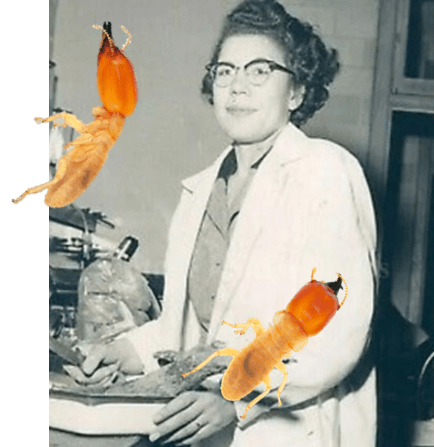
Margaret Collins, nicknamed the ‘Termite lady’, was the first African American woman to earn a PhD in entomology, and became a renowned specialist in termites, particularly termite physiology, taxonomy and use of chemical defences. Graduating from school aged only fourteen, she studied biology at university, before earning a PhD from the University of Chicago in 1950. Here, Collins discovered her fascination for termites, and, despite not being allowed on fieldwork, her dissertation on the variation in desiccation tolerance among termite species is still frequently cited. In 1953, she became a professor at Florida Agricultural and Mechanical University, during which she was involved in the civil rights movement, volunteering as a driver for the student bus boycott, which resulted in her being tailed by the FBI. After moving to Howard University, Collins became president of the Entomological Society of Washington and a research associate at the Smithsonian Institution, allowing her to travel for fieldwork in Arizona, Mexico and Central America. While in Guyana, she advised the military on how to strengthen buildings using termite excretions. In 1979, Collins organised a symposium for the American Association for the Advancement of Science, focusing on Science and the Question of Human Equality, which she later published as a book.
Conclusion:
Looking back at these fascinating stories, we can see an emerging pattern, as the field of entomology becomes more accessible. The early Victorian entomologists, roaming the world on collecting trips, or dedicating hours to breeding butterflies, tended to come from privileged backgrounds, given more freedom by their class and wealth. However, moving into the 20th century, scientists like Alwen Evans and Margaret Collins were able to make their living from studying insects, as the field became more open to people from a range of backgrounds. Although clearly opportunities for women have improved since the days of the ‘lady entomologists’, there still seem to be barriers. Research by the Entomological Society of America highlights the significant underrepresentation of women entomologists in industry, academia and government roles, with the proportion of women significantly decreasing with increasing rank (Walker, 2018; Walker, 2022). There is still work to be done.
Written by: Stephanie Glendinning
References:
Bolt, C. (2024) Celebrating the women trailblazers of entomology, WWF. Available at: https://www.worldwildlife.org/stories/celebrating-the-women-trailblazers-of-entomology
Constructing Scientific Communities (2018) Emma Hutchinson (1820-1906), University of Oxford. Available at: https://conscicom.web.ox.ac.uk/article/emma-hutchinson-1820-1906
Dixon, L. (2023) Who was the entomologist who stopped at nothing to fight Malaria? National Museums Liverpool. Available at: https://www.liverpoolmuseums.org.uk/stories/who-was-entomologist-who-stopped-nothing-fight-malaria
Entomology Today (2022) Famous female entomologists, Entomological Society of America. Available at: https://entomologytoday.org/tag/famous-female-entomologists/
Gail E. Kampmeier, G.E. (2011) Great women in entomology, American Entomologist, 57(4), pp. 202-203.
Gibbs, K.E. (2014) Without benefit of insects: the story of Edith M. Patch of the University of Maine. Maine Agricultural and Forest Experiment Station Miscellaneous Publication 763.
Grillo, E. (n.d.) Margaret S. Collins, University of Oxford Museum of Natural History. Available at: https://oumnh.ox.ac.uk/learn-margaret-s.-collins
Lotzof, K. (2018) Lucy Evelyn Cheesman: the woman who walked, Natural History Museum. Available at: https://www.nhm.ac.uk/discover/lucy-evelyn-cheesman.html
Lotzof, K. (2020) Maria Sibylla Merian: metamorphosis unmasked by art and science, Natural History Museum. Available at: https://www.nhm.ac.uk/discover/maria-sibylla-merian-metamorphosis-art-and-science.html
Mark McLaughlin (2015) Ximena McGlashan: Truckee’s butterfly farmer, Tahoe Guide. Available at: https://yourtahoeguide.com/2015/06/ximena-mcglashan-truckees-butterfly-farmer/
Simmons, Z.M. (2019) Dame Miriam Louisa Rothschild, University of Oxford Museum of Natural History. Available at: https://oumnh.ox.ac.uk/learn-dame-miriam-louisa-rothschild
Spooner, A. (2019) Eleanor Anne Ormerod, University of Oxford Museum of Natural History. Available at: https://oumnh.ox.ac.uk/learn-eleanor-anne-ormerod
Troyo, A., González-Sequeira, M.P., Aguirre-Salazar, M., Cambronero-Ortíz, I., Chaves-González, L.E., Mejías-Alpízar, M.J., Alvarado-Molina, K., Calderón-Arguedas, O. and Rojas-Araya, D. (2022) Acknowledging extraordinary women in the history of medical entomology, Parasites & Vectors, 15, 114.
Walker, K.A. (2018) Gender gap in professional entomology: women are underrepresented in academia and the U.S. Government, Annals of the Entomological Society of America, 111(6), pp. 355-362.
Walker, K.A. (2022) Longitudinal career survey of entomology doctoral graduates suggests that females are disadvantaged in entomology job market, Annals of the Entomological Society of America, 115(6), pp. 472-480.Waring, S. (2015) Margaret Fountaine: a lepidopterist remembered, Notes and Records of the Royal Society Journal of the History of Science, 69, pp. 53-68.
All pictures from references above.
 EntoBites