
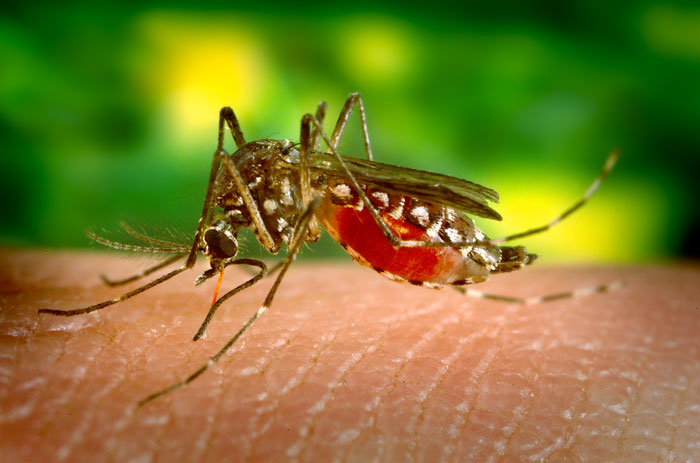
Many people worry that mosquitoes might spread Lyme disease. After all, mosquito bites are common, and Lyme disease is one of the most widespread vector-borne diseases in the Northern Hemisphere. However, new research suggests that mosquitoes are very unlikely to transmit this disease to humans.
What Causes Lyme Disease?
Lyme disease is caused by bacteria from the Borrelia burgdorferi group. The bacteria are normally spread by ticks of the genus Ixodes, which feed on animals such as rodents, birds, or deer and occasionally bite humans.
However, many people diagnosed with Lyme disease do not remember being bitten by a tick, and because mosquito bites are much more noticeable, some people have assumed mosquitoes might also spread the infection.
Why Scientists Studied Mosquitoes?
So researchers wanted to test whether mosquitoes could play a role in spreading Lyme borreliosis. In the study, scientists examined three mosquito species that frequently feed on humans: the yellow fever mosquito (Aedes aegypti), the southern house mosquito (Culex quinquefasciatus), and the northern house mosquito (Culex pipiens).
They tested whether these mosquitoes could become infected with the bacteria, keep the bacteria alive inside their bodies, and infect another host.
What the Experiments Showed?
The results were clear: mosquitoes could not transmit Lyme disease. But how can scientists be so sure? The researchers discovered three important things:
- Mosquitoes rarely acquire (pick up) the bacteria when feeding on infected animals.
- Any bacteria they ingest quickly die in the mosquito gut during digestion.
- Mosquitoes cannot transmit the bacteria to another host, even when experiments simulate interrupted feeding (a scenario where a mosquito starts feeding on one host, gets interrupted, and then continues feeding on another host).
Why Ticks Can Spread this Disease but Mosquitoes Cannot?
Ticks feed on their hosts for several days, giving the bacteria time to move from the tick’s gut into its saliva and then into the host. Mosquitoes, on the other hand, feed very quickly, often within seconds or minutes. This short feeding time makes it nearly impossible for the bacteria to infect a new host. In addition, digestive enzymes in the mosquito gut destroy the bacteria before they can survive long enough to spread.
What This Means for Public Health?
The study confirms that ticks remain the only known vectors of Lyme disease. This means that preventing tick bites is still the most important way to avoid infection.
Simple precautions include:
• Wearing long sleeves and pants in wooded areas
• Using tick repellents
• Checking your skin for ticks after spending time outdoors
So What Does This Mean?
Although mosquitoes are well known for spreading diseases like malaria and dengue, current scientific evidence shows they do not spread Lyme disease. The real risk comes from ticks, which remain the primary vectors of this infection. Understanding how diseases are transmitted helps scientists design better prevention strategies and avoid unnecessary fears.
Reference: Pekľanská M, Kuníková K, Vlčková R, Slabová H, Hartmann D, Volfová K, Rudolf I, Šikutová S, Rego ROM, Noriega FG, Hajdušek O, Perner J, Votýpka J, Nouzová M, Šíma R. Experimental evidence rules out mosquitoes as vectors of Lyme disease. Parasit Vectors. 2025 Jun 4;18(1):206. doi: 10.1186/s13071-025-06823-x. PMID: 40468371; PMCID: PMC12135369.
 EntoBites
Leave a comment